
Garage door installation day: what happens and what it costs
From the measure visit to the final safety test, here is what happens when we install a garage door, what to get ready, and what the price should cover.
A broken part is a repair far more often than a reason for a new door. Here is how we tell the difference: the signs, the one-section option, hail dents, insulation and starting prices.
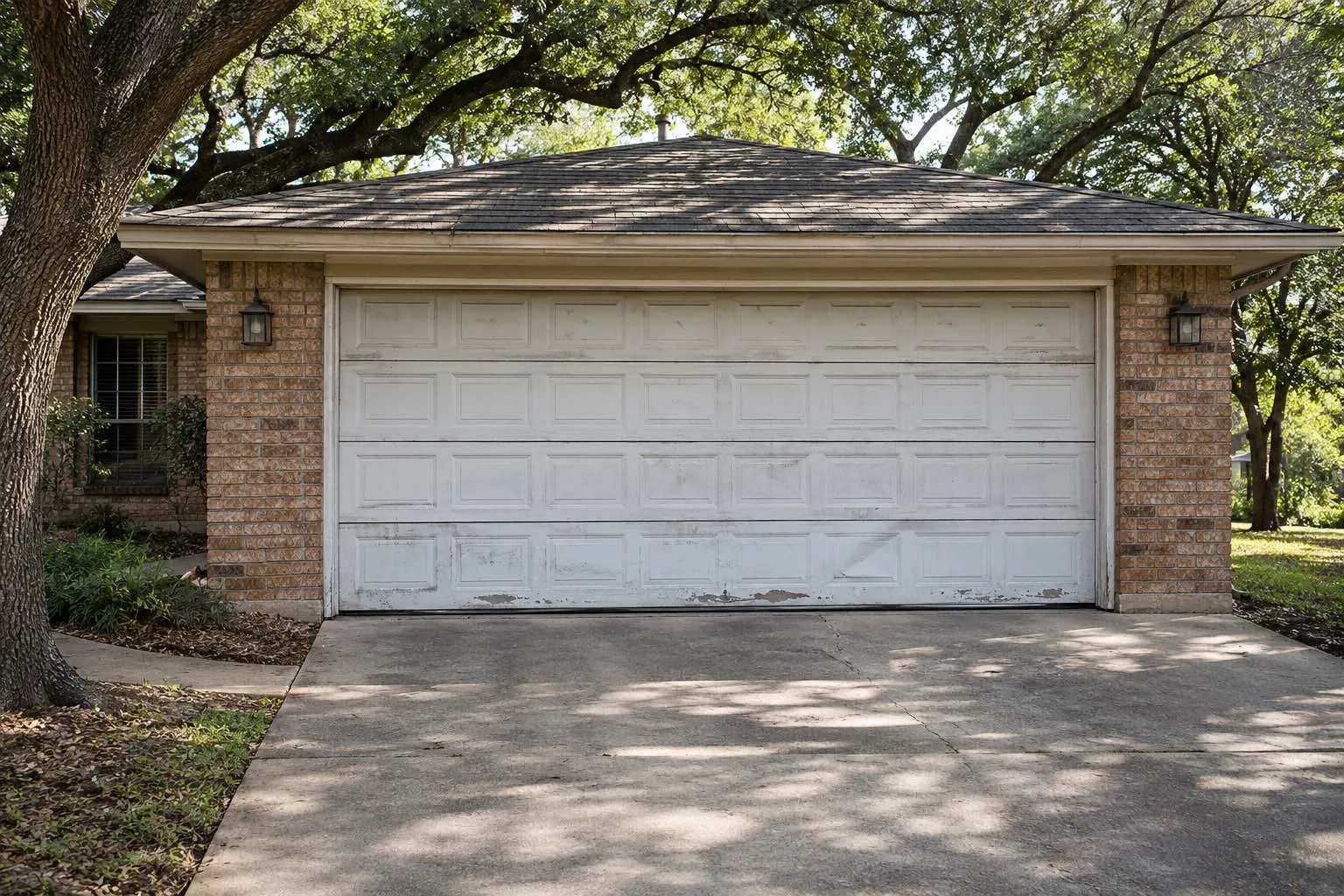
The call usually starts the same way. The door is old, something just broke, and the caller wants to know if it is finally time for a new one. We hear it every week, and the honest answer is that one broken part usually means a repair, not a new door.
That said, some doors really are done. This post is the method we use on the phone and again on a visit: what to look at, which signs point each way, what one new section can and cannot do, and what each path starts at. You can run most of it from the driveway before you call anyone.
A broken part is a repair far more often than it is a reason to replace the door. Replace when the damage is wide, when sections are cracked or separating, or when the door and the opener are both past worth fixing. Everything else is a repair, and the first job is working out which one you have.
Start with three questions. What actually broke? Is the damage on one part, or spread across the door? And what does the whole door look like when you stand back from it? Answer those honestly and you will know which way you lean before anyone quotes you a price. The rest of this post helps with each one, and whatever you find, keep your hands off the springs and cables.
Leave the springs and cables alone. They hold a heavy door under tension, and a slip can hurt you. Do not adjust them yourself, and call us if something looks wrong.
Springs, cables, rollers, a track the door jumped and an opener that stopped are all repairs, and none of them says the door itself is finished. A door built from sound steel sections can take new hardware and keep running. So before you price a new door, find out which part actually failed and what fixing that part costs.
A torsion spring pair starts at $349, and a single torsion spring at $229. Cable replacement starts at $149, upgraded rollers at $139, and getting a door back on its track at $149. A tune-up and safety check starts at $120, and opener repair starts at $129 plus parts. Those are starting prices, and the exact price is in writing before we start. Each job has its own page: spring replacement, cable and roller repair, off-track repair, tune-ups and opener repair.
A new spring tells you nothing about the rest of the door. DASMA, the door makers’ trade association, notes that spring cycle life may not coincide with door cycle life. So a fresh spring does not mean a young door, and a worn door does not make the spring job wasted. Our post on how long garage door springs last covers the spring math if you want it.
Those three numbers frame the decision. The first is the dated one: a 2006 study by the National Association of Home Builders, quoted on DASMA’s consumer page, lists garage doors at 10 to 15 years, and the page is a 2007 reprint. Treat it as a typical range, not a verdict on your door. The second, Clopay’s figure of about 1,500 open and close trips a year for the average door, shows why hardware wears even on a well-kept door. The third, DASMA’s range of 90 pounds to over 500 pounds, shows why the springs matter whenever a door gets heavier.
A repair is the right call when one part has failed and the rest of the door is sound. The sections are straight, the panels are not cracked, the door closes tight and the opener still reverses on contact. If that describes your door, fix the part and keep the door. Replacing a door that only needs a cable is money spent on the wrong thing.
Think of the failures that come from moving parts. A frayed cable, a worn roller, a spring that let go, a door that jumped its track: each is hardware doing what hardware does after enough trips. We can replace the part, test the balance and put the door back to work. One caution: if someone added weight to the door after it was installed, such as heavy trim or a lot of paint, DASMA says the springs were sized for the original weight and the door can fall out of balance. Tell us if that happened.
Signs that point to repair
A repair does not have to be a patch. Fixing the failed part and then checking the balance, tracks and opener safety tells you where the whole door stands. If you are unsure what failed, a tune-up and safety check looks at all of it in one visit.
A door is a candidate for replacement when the damage is widespread, when sections are cracked or separating, when deep dents sit near an edge or a seam, or when the door and the opener are both old. Door makers say much the same about damage: a broken section can be swapped only while the door model is still made, and wider damage often means replacing the door.
Clopay, a door maker, says that when damage is widespread a full replacement is usually the better investment, and that deep dents may weaken the panel itself. It adds that if a door is nearing the end of its expected life, money put into repairs may not make much sense. Read the whole piece on repairing or replacing a dented door if you want the manufacturer’s view. Raynor, another maker, says a dealer can replace a broken section if the model is still being made, and that an older door or wider damage often makes replacement the better choice. On wood doors it also points to rot, with loose or missing hinges and rollers.
DASMA’s inspection checklist for home inspectors asks whether the panels are free of fatigue, cracking and separation of materials. If the answer is no, DASMA says the door could be hazardous and should be looked at by a trained technician. That is a good place to stop being a do-it-yourselfer. The opener also counts, because an old opener on an old door is two problems, not one.
Opener made before 1993? The federal rule on opener entrapment protection covers operators made on or after January 1, 1993, so an older one predates it. Check for photo eyes, and test that the door reverses on a 2x4 laid flat. If it does not reverse, stop using the opener and call us.
The federal rule is public, and the text of 16 CFR 1211.1 is short. It does not say every older opener is unsafe. It says the rule starts in 1993, so an opener older than that was not required to meet it. Looking for photo eyes and running the reversal test shows you what yours does.
The National Weather Service says Austin’s severe weather season runs mostly from March through May, and that most of it arrives as large hail and strong winds. Whatever leaves a dent, it is a repair question first, and a replacement question only when it is deep, near an edge or seam, or on many sections.
The National Weather Service’s weather history for the area, last updated in spring 2023, records the costliest hailstorm in Austin history to that point on March 25, 2009, with hail up to 3 inches across. That storm is the extreme case. For your door, what matters is the dent itself, not the size of the storm that left it.
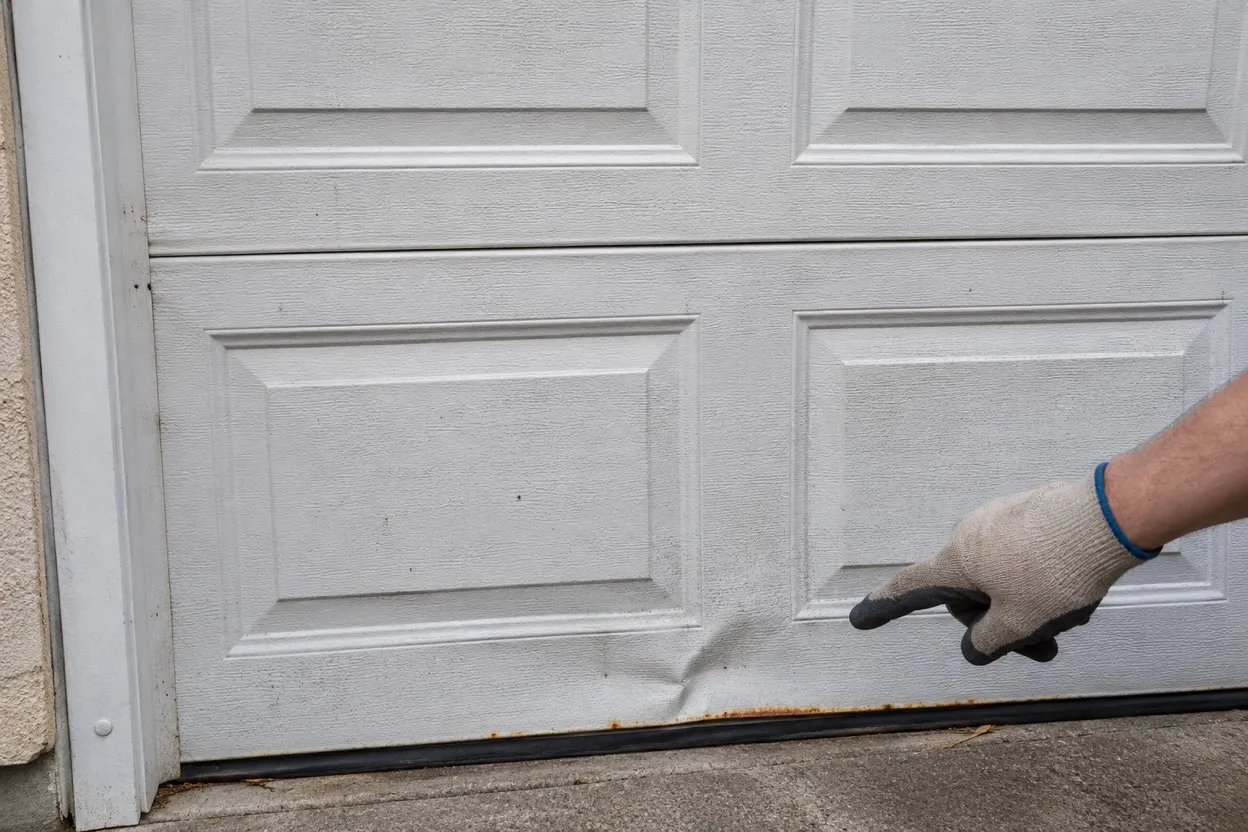
Here is how we read a dent. Clopay says dents near the center of a panel are often easier to fix than those close to the edges or along the seams, and that steel is tougher but less forgiving when a dent is deep. So we look at where the dent sits, how deep it is and whether the metal is creased. We do not have a gauge-by-gauge rule for how hail dents steel, and we will not make one up. Whether your homeowner policy covers a dent is a question for your insurance company, not for us.
Replacing one damaged section can save a door, but only if the door’s maker still makes that model. Clopay and Raynor both say a dealer can supply a replacement section while the model is still manufactured. Clopay adds that a new section may not match an older door’s color exactly. We cannot promise a match for any door until we identify it.
For a Clopay door made in the last ten years, the maker says the 15 to 16 digit serial number is on the interior bottom section, and that number helps identify the model. Some styles, such as Coachman carriage house doors, come with restrictions, so Clopay tells owners to check with a distributor. For an older door, or another brand, the job is detective work: photos, measurements and the label, if one survives.
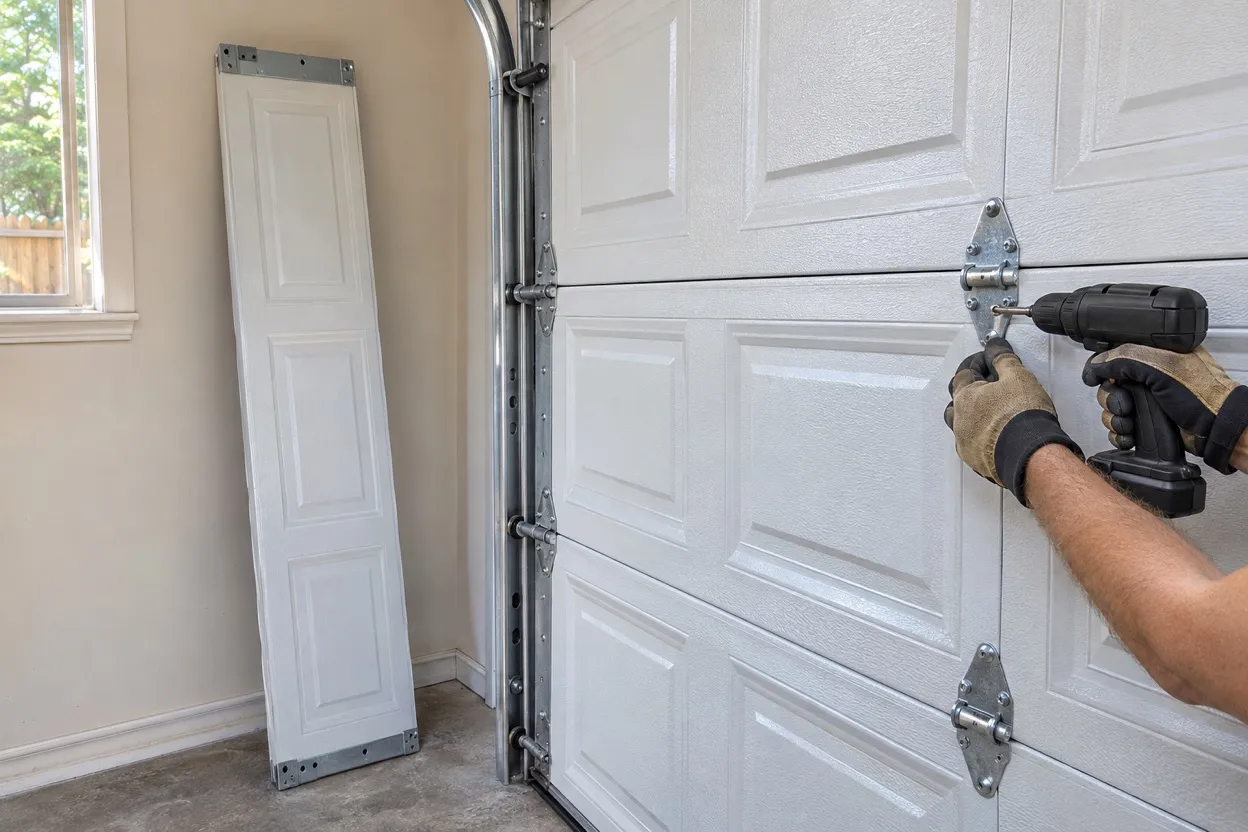
Color is the other catch. Clopay says exposure to the elements can change a door’s color over time, so a new section may not be a perfect match. Ask us what to expect on color before the order goes in. We order the section from the door’s maker. We do not drop in a lookalike from another brand, since a part that looks the same may not carry the same strength. A section starts at $349, and the panel replacement page covers the visit.
Have ready for a section quote
That list is short because identifying the door is most of the work. If we can match the model, a section swap can be a sensible fix. If we cannot, the quote tells you so, and replacing the door becomes the honest answer.
An insulated door has foam between two steel faces, and it can lessen heat moving from a hot garage into an attached house. That is all the evidence supports. The Department of Energy’s Building America Solution Center gives no savings figure for it, so neither will we. Treat insulation as a comfort choice, not a payback promise.
The same DOE page says older homes often have uninsulated garage doors, and that insulating a door can raise comfort in the garage. It also says to replace weatherstripping that is cracked or peeling, or if you can see daylight under the door when it is closed. Read the page on how to insulate and weatherstrip a garage door if you want the details. A new seal at the bottom can be a smaller job than a new door, so check it first.
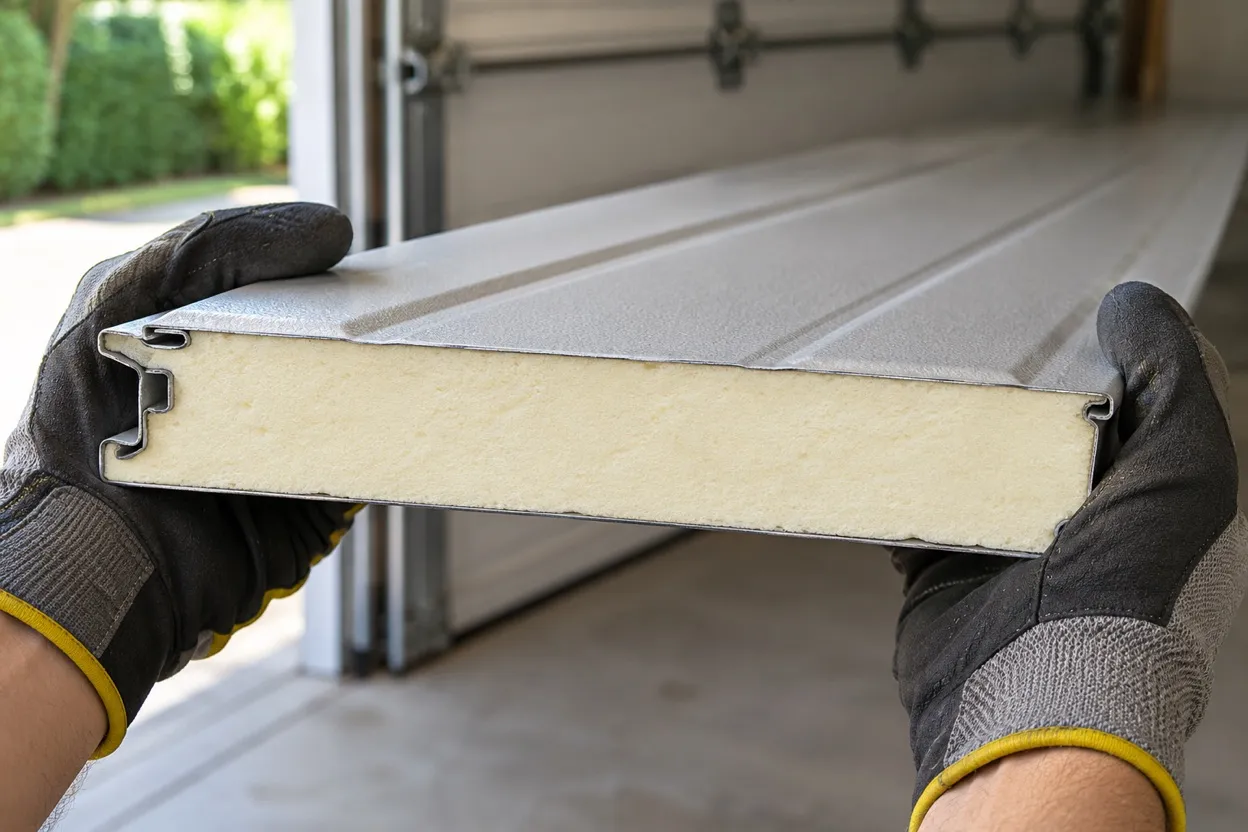
When you compare doors, compare like with like. DASMA’s technical sheet explains that R-value and U-factor come from different methods, are not reciprocals of each other, and cannot be compared directly. So if one brochure quotes R-value and another quotes U-factor, ask the seller to use one measure. Insulation also changes weight. A heavier replacement needs springs matched to that weight, and we size them for the door we install. Our new garage doors page covers the choices.
Repair prices start at $120 for a tune-up and safety check, $349 for a torsion spring pair and $349 for one new section. A new single door in basic steel starts at $899 installed, and an insulated double door at $1,899. These are starting prices, not quotes, and the exact price goes in writing before any work starts.
| Option | Starts at |
|---|---|
| Tune-up and safety check | $120 |
| Cable replacement | $149 |
| Upgraded rollers | $139 |
| Off-track repair | $149 |
| Opener repair (plus parts) | $129 |
| Torsion spring, single | $229 |
| Torsion springs, pair | $349 |
| One section replaced | $349 |
| New single door, basic steel, installed | $899 |
| New single door, insulated, installed | $1,249 |
| New double door, basic steel, installed | $1,599 |
| New double door, insulated, installed | $1,899 |
The service call and the after-hours trip are not in the table. A service call fee applies to a visit, and we waive it when you approve the repair on the same visit. An after-hours emergency trip outside 7am to 8pm has its own fee, and coupons do not waive it. Both are listed on our prices page, and the exact total goes in writing before work begins.
Here is the method we suggest. Add up the repairs your door needs today, then look at the starting price of a door like yours. If the repairs add up to a large share of the new door, that is the moment to ask whether the door is worth the money. Windows, wood and custom colors cost more, so the table is a floor for a door, not a ceiling.
Repair or replace the opener on its own schedule. A working opener with working safety eyes can stay with a new door if it suits the door. An opener that struggles with the weight, fails a reversal test or predates 1993 is a separate decision, and it should not be bundled into the door decision by default.
Test yours monthly, as the label that comes with an opener says. Lay a 2x4 flat in the path of the door and close it. The door should stop on contact and reverse. If it does, the opener can stay in the conversation. If it does not, stop using the opener and call us. If you are weighing a new one, our opener installation page lists what that visit covers, and our post on hub or new opener helps you choose between adding a smart hub and replacing the opener.
On a visit we look at the whole door before we quote anything: the sections, the hardware, the opener and the balance. Then we tell you which path we would take and why, and the price goes in writing before any work starts. You can say no and still keep what we found.
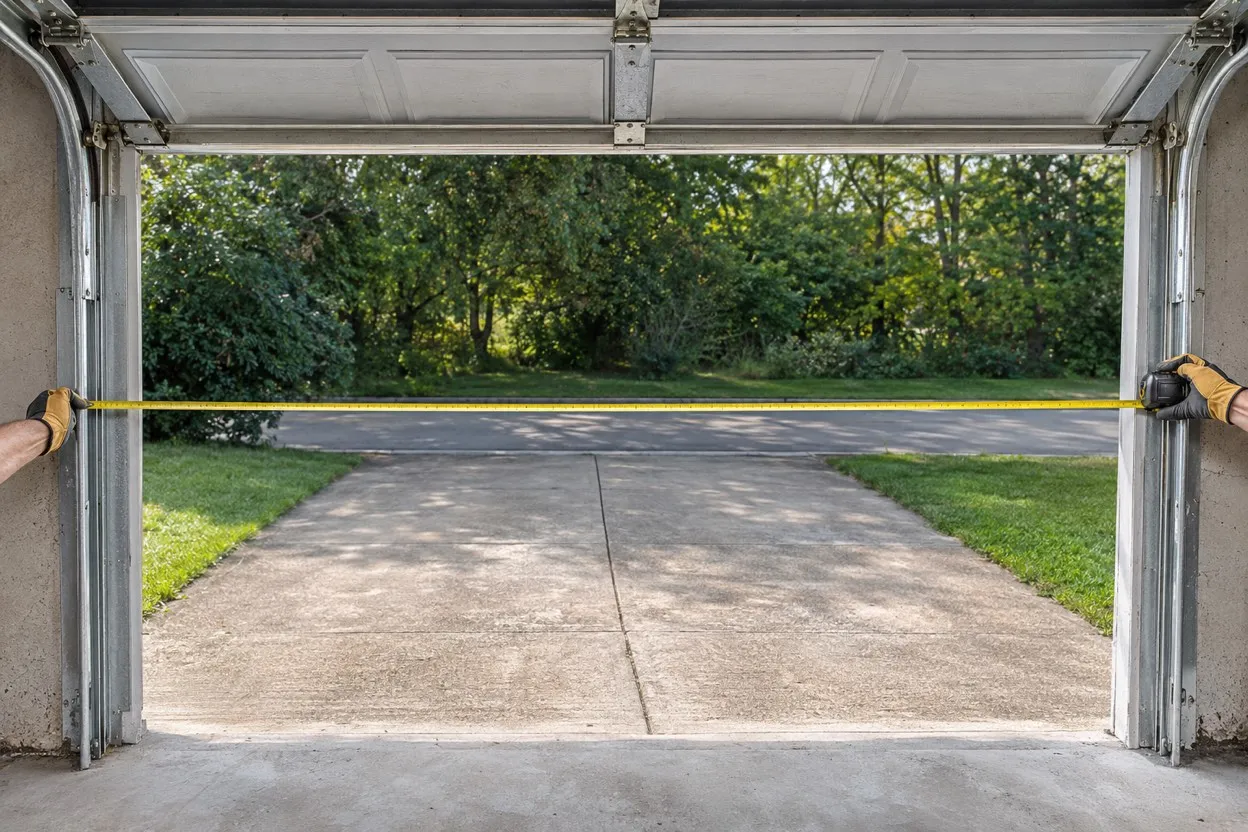
After 15+ years on doors and gates, the order rarely changes. We run these steps on every visit, so you can follow along.
If replacement is the answer, we measure the opening before anything is ordered, so the door fits the space. Questions before you book? Call us at (512) 737-0199.
Repair when one part failed and the sections are sound. Replace when damage is widespread, sections are cracked or separating, or the door has little life left. A single section works only if the model is still made. Insulation is about comfort, and the opener is its own call. Either way, the price is in writing first.
If you decide to replace, our post on what happens on installation day walks through the visit from measure to final test. If you are still not sure, tell us what the door is doing at (512) 737-0199, and we will tell you straight which way we would lean.
Dean
Starting prices, installed. Your exact price is in writing before any work starts.
Look at what failed and at the rest of the door. If one part broke, such as a spring, cable, roller or track, and the sections are straight and uncracked, the door is usually worth fixing. If the damage is spread across several sections, or sections are cracked or separating, a repair may not hold. We look at the whole door on a visit and put the price in writing before any work starts.
A repair almost always costs less up front. A tune-up starts at $120, cable replacement at $149 and a torsion spring pair at $349. A new single basic steel door starts at $899 installed. The better question is what your repairs add up to, and whether the door will keep earning that money.
No. Age alone is not a reason. A 2006 industry study quoted by DASMA puts typical door life at 10 to 15 years, but that is a range from an old survey, not a rule for your door. If the sections are sound, the hardware is sound and the opener reverses on contact, an older door can keep working. Cracks, separation and wide damage are the signs that matter.
Not automatically. We reuse an opener that is sound, works with the new door and reverses on contact. We recommend a new one when the opener struggles with the door or fails the reversal test. An opener made before January 1, 1993 predates the federal entrapment rule, so we check it for photo eyes and test it before we say either way. A new belt-drive opener starts at $599 installed.
No. DASMA notes that spring cycle life may not match door cycle life, so a fresh spring says nothing about the sections, hinges or tracks. After a spring job we check the balance and the rest of the hardware, and we tell you if the door itself is showing wear.
From the measure visit to the final safety test, here is what happens when we install a garage door, what to get ready, and what the price should cover.
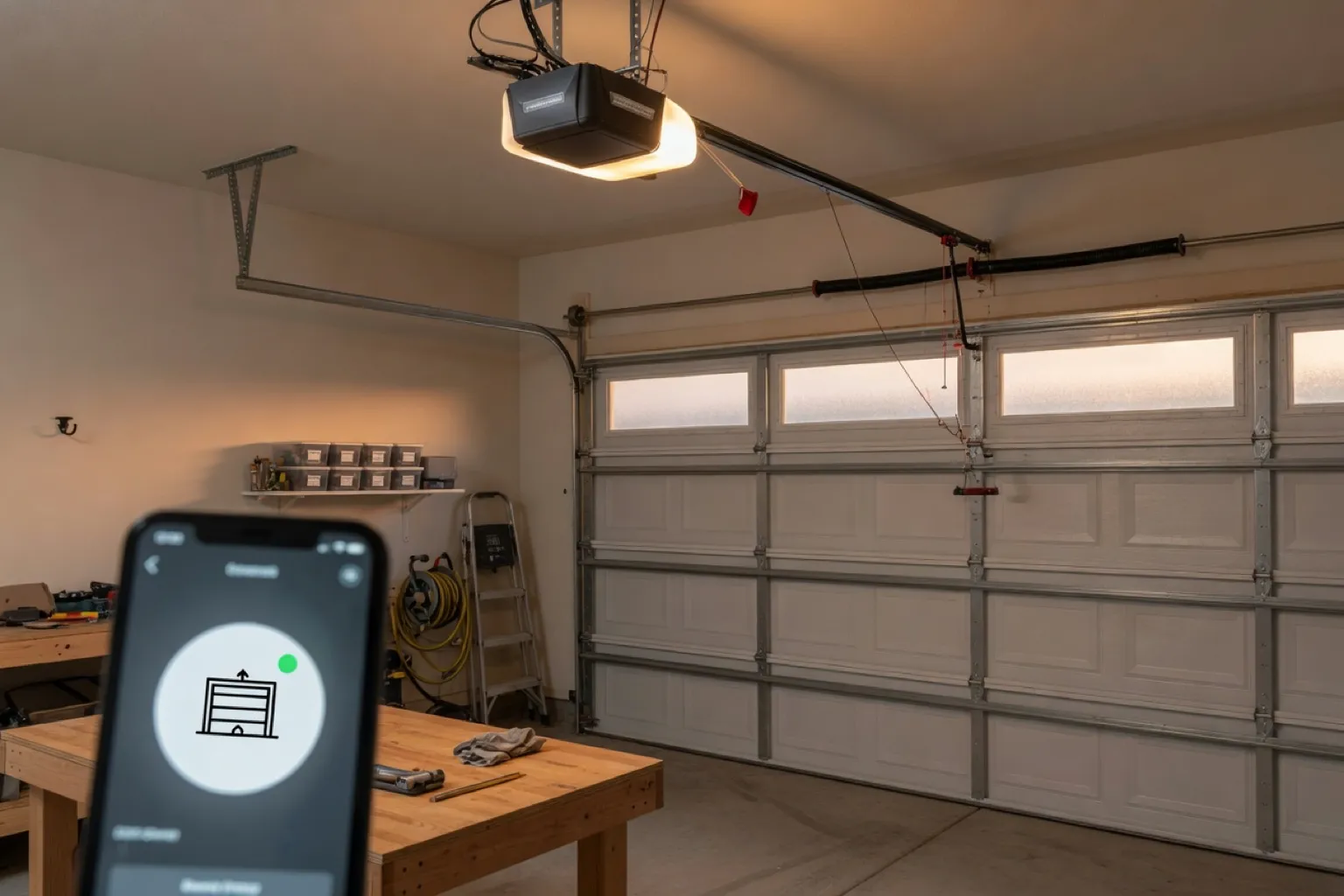
Before you buy a smart hub, look at the learn button on your opener. Here is what works with what, and when a new smart opener is the better buy.
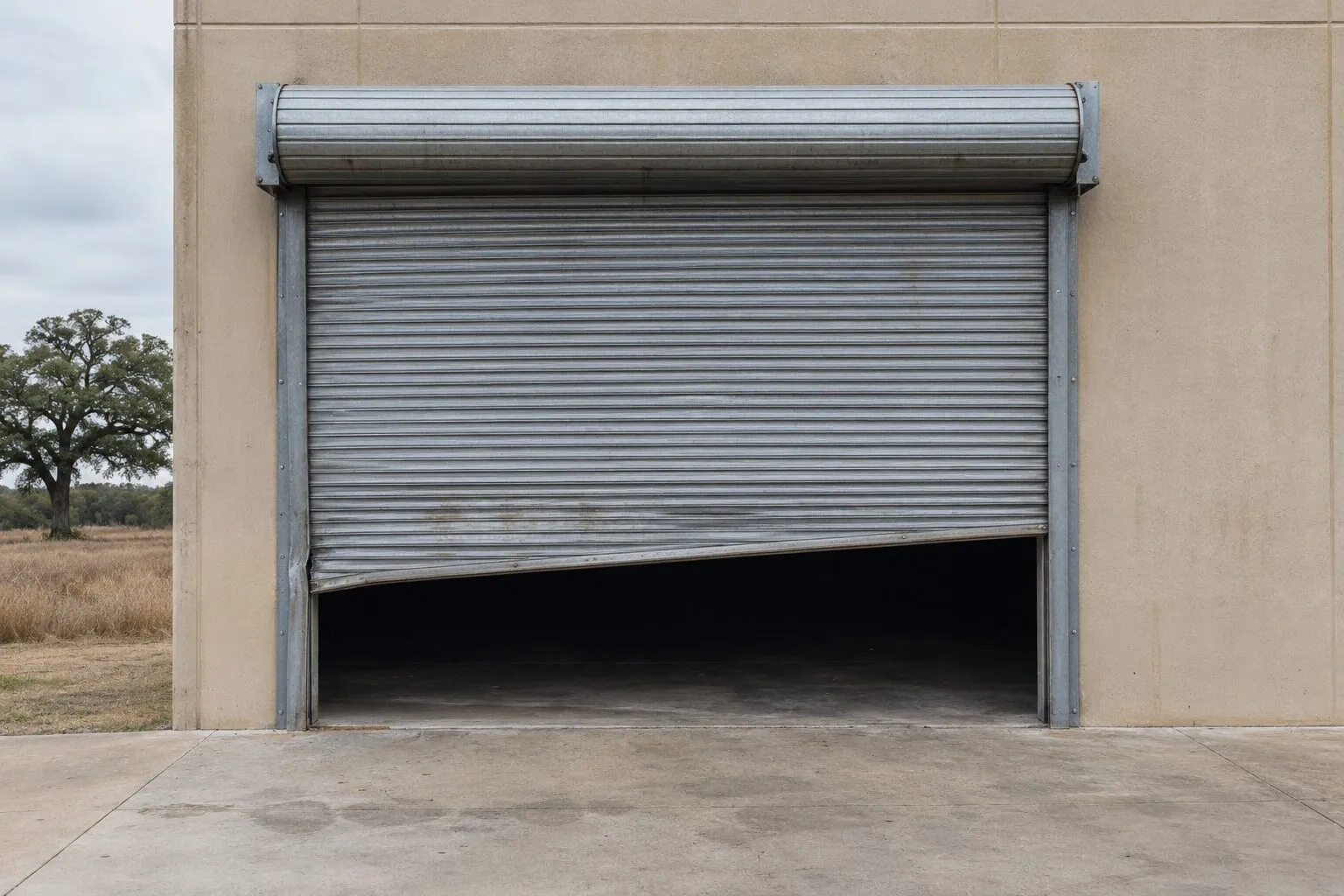
A commercial door that will not move has a short list of causes. Here are the safe checks a manager can run, the parts to leave alone, and what to tell us on the phone.
Open daily 7am to 8pm. After-hours emergency line. 304 E Main St #204, Round Rock.