
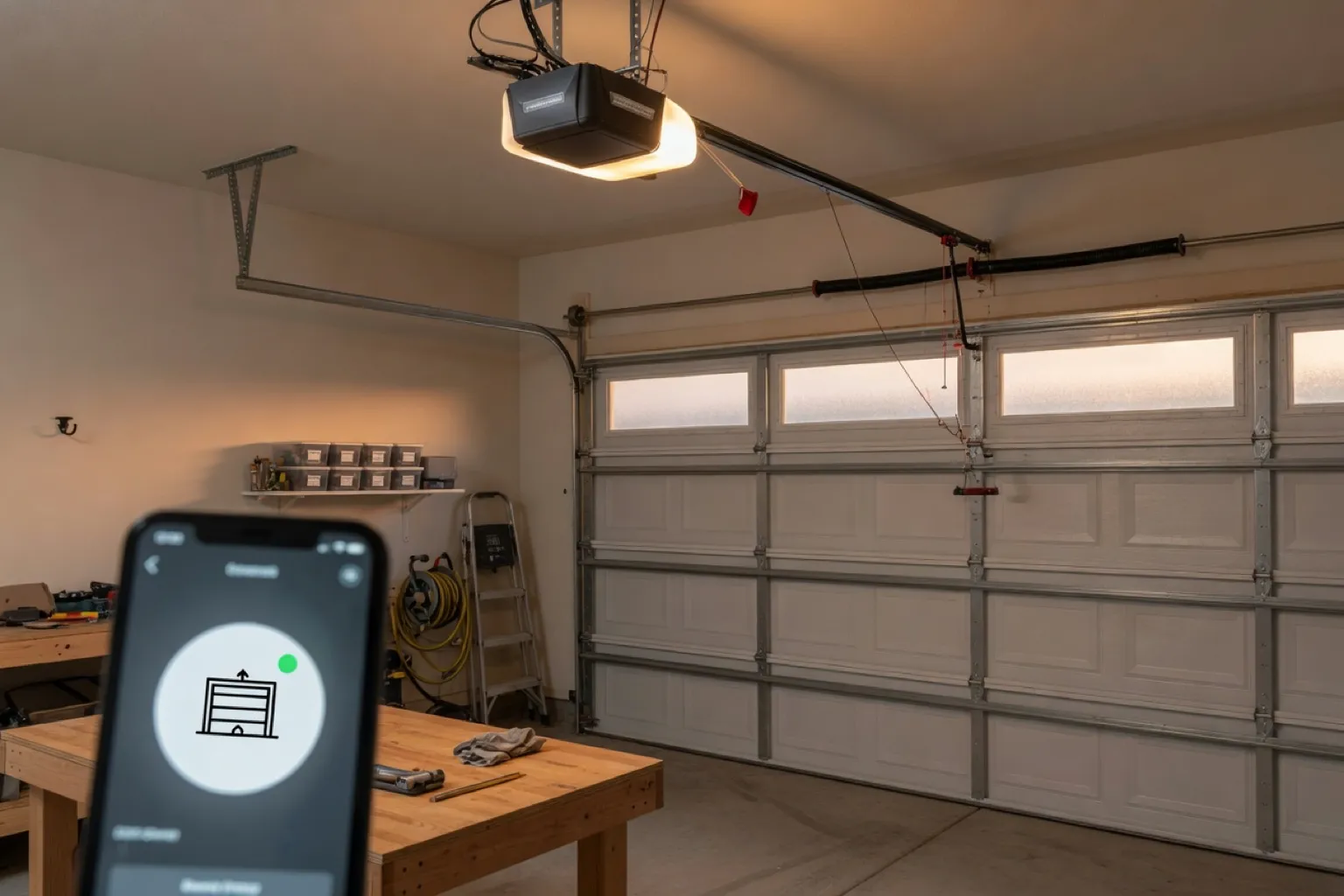
Smart garage door opener: add a hub or buy a new one?
Before you buy a smart hub, look at the learn button on your opener. Here is what works with what, and when a new smart opener is the better buy.
From the measure visit to the final safety test, here is what happens when we install a garage door, what to get ready, and what the price should cover.
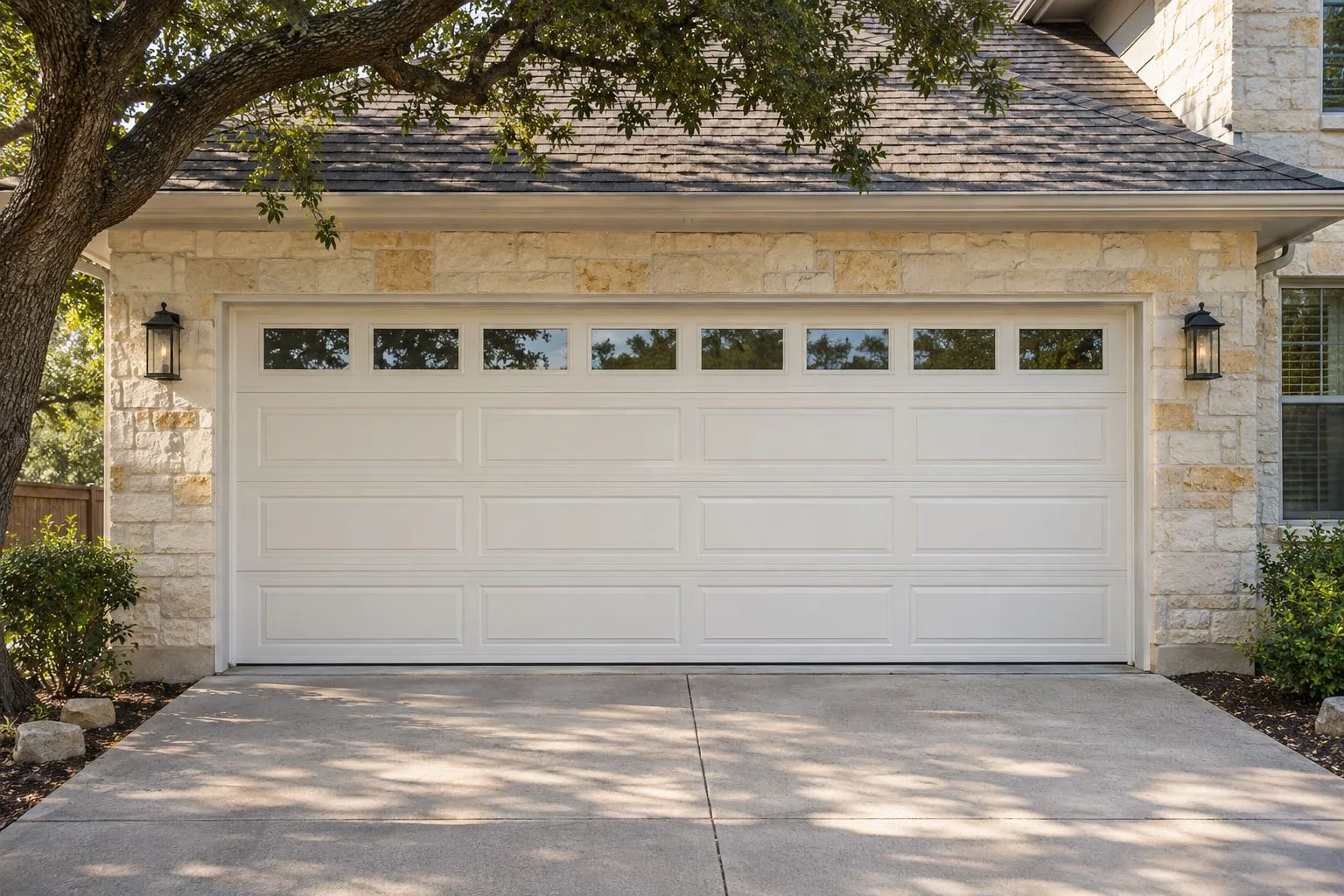
The question we hear most before an install is a plain one: what actually happens that day, and how long will my garage stand open? The honest answer has two parts. Some of the day is the same on every job. The rest depends on the door you picked and the opening it goes into.
This post walks through the day in order, from the measure visit to the last test, and then what the price covers. It is written for a standard sectional steel door. If you are still choosing, start with our new garage doors page, which covers insulation, style and what to decide before you buy. Here we stay on the work itself.
Before anyone picks up a wrench, we measure the opening: width, height, headroom above the door, sideroom beside it and backroom behind it. Those five numbers decide which door fits and which track and spring system it needs. A stock size and color can sometimes go in soon. A custom door is ordered first, and we do not promise a day until the door is in hand.
Why so many measurements? Because a door can be the right width and still not fit. The track needs room above the opening and behind it, and the spring system you choose changes how much. Clopay publishes typical clearances for its standard residential sectional doors. They are a good picture of what a door asks of your garage, though they vary by track and spring type.
| Clearance | Typical for Clopay doors |
|---|---|
| Sideroom, each side | 3 3/4 in for standard extension, standard torsion and EZ-SET torsion; 5 1/2 in for EZ-SET extension |
| Headroom, extension springs | 10 in |
| Headroom, torsion springs | 12 in |
| Backroom | Door height plus 18 in |
Source: Clopay’s garage door installation guide. Clopay adds that special hardware exists for restricted headroom, that an automatic opener needs additional headroom, and that it may need additional backroom. Treat the table as typical for Clopay, not a rule for every brand. We measure your garage and tell you what fits.
In the City of Austin, replacing or installing an overhead garage door on a one- and two-family home is on the city’s list of work exempt from a building permit. Floodplain properties are the caveat. Other cities may differ, and we do not guess, so confirm with yours. An HOA approval is a separate step, and it comes before the door is ordered.
Here is the exact wording. The city’s exempt-work list includes “replacing or installing an overhead garage door on a garage,” and it says a permit may still be required in a floodplain even if the work is listed. Exempt work still has to meet building and city codes. You can read the list on the City of Austin page for work exempt from building permits. Round Rock and the other cities we serve set their own rules, so call your city before you order.
Get HOA approval in writing first. Many subdivisions review the style, color and window pattern of a garage door. A custom door is built to order, so get the approval letter before the order goes in, not after.
What about wind ratings? The state’s windstorm program, run by the Texas Department of Insurance, covers designated catastrophe areas on the Gulf Coast. The TDI windstorm inspections page lists the first tier counties, and Travis and Williamson are not on that list. That does not mean a wind rating is never asked for. A local code or an HOA could differ, so ask.
Plan the morning like a repair visit, with a bit more room. The garage and the driveway in front of it need to be clear, and an adult needs to be around at the start and at the end. The list below is what we ask every customer to have ready. None of it takes long, and it keeps the crew working instead of moving boxes.
Ready for installation day
Why the depth of the door? A sectional door is stacked section by section, and the old door comes down in pieces. Boxes, bikes and shelves in that space slow everything and can get damaged. Move them out the day before if you can.
The work follows one order on a standard sectional door. The old door comes down first, the new tracks go up, the sections are stacked, the springs go on, and the opener is connected and tested last. The six steps below are the sequence we follow. Each one is finished before the next one starts.
Step one is quick, but it matters. A door that arrives with the wrong size, color or window pattern is far easier to fix before it is bolted up than after. We check the labels and the sections with you at the start.
The old door comes out first, and before anything is unbolted, a technician releases the spring tension. DASMA says the bottom brackets on a garage door are connected to the springs, so they are under extreme tension. Releasing that energy safely is the reason this step stays with a trained technician and not a helper with a wrench.
DASMA, the trade association for door makers, is blunt about it. Its garage door safety tips say installing a garage door can be dangerous and is not recommended for a novice, and that trained door systems technicians should do it. Once the tension is off, the old door comes down one section at a time. The sections get stacked on the driveway or moved out of the way.
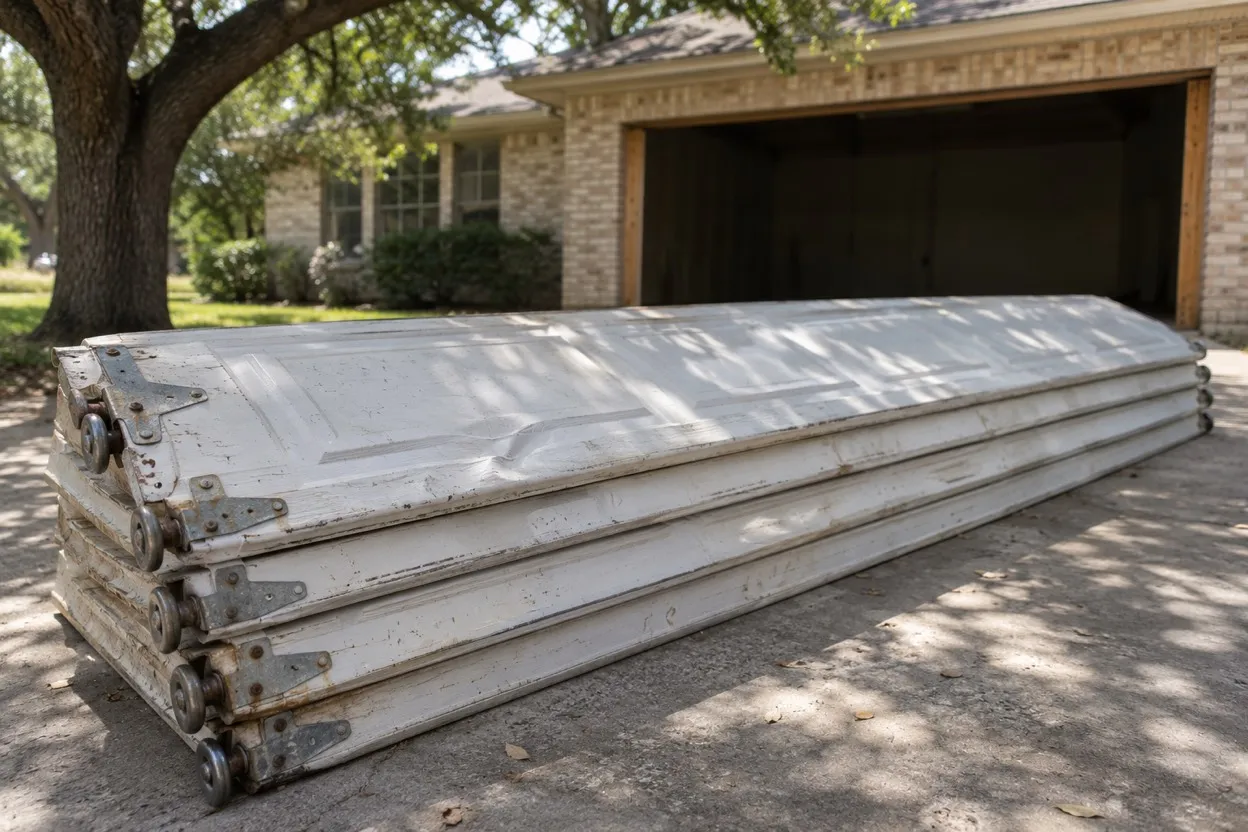
What happens to the old door after that? The written quote should say. We do not assume it, and we do not list haul-away as free or included unless the quote says so. If your quote does not mention the old door, ask before the day, so there are no surprises on the driveway.
With the old door out, the new tracks and hardware go in. Clopay says new hardware is designed specifically to work with the weight and configuration of the door, and that reusing old hardware does not save anything. We agree with the logic. The tracks are set plumb and level, because a door can only run as straight as the track it rides in.
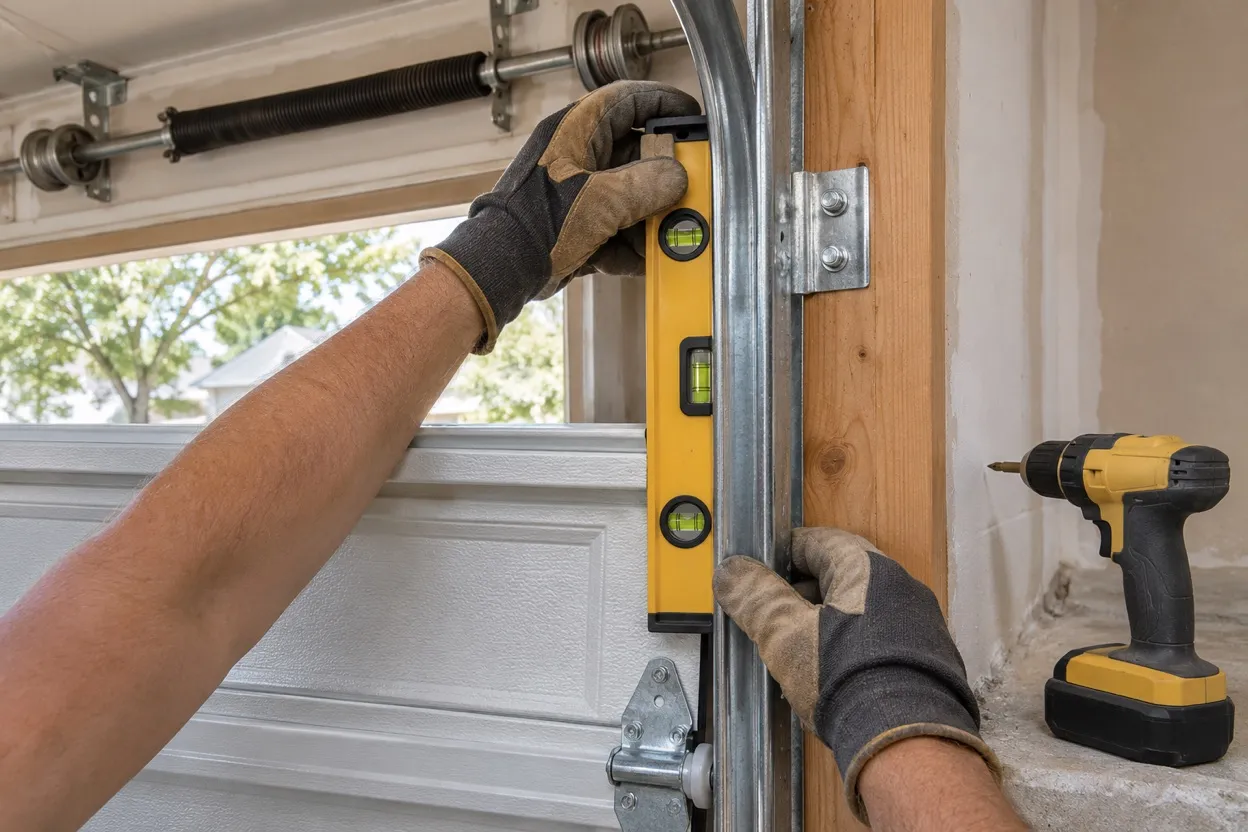
Then the door itself goes up. The sections are stacked from the bottom, each one set into the tracks with its rollers and hinges. On a wide door we usually add struts, the steel stiffening bars that run across the back of the sections. The top section is the one the opener will pull on, so it is set and reinforced with that in mind.
This stage is where a measure that was slightly off shows up. A track that is not level shows up as a door that rubs or drifts. That is why we measure twice, and why we set the track before the sections, not after.
A new door has a different weight from the old one, so the springs are chosen for it. That is our practice, and it is the logic behind Clopay’s line about hardware designed for the door’s weight and configuration. The springs are installed and wound only after the sections are hung, because the door has to be on the tracks before the spring has anything to lift.
Do not touch the springs, cables or bottom brackets. DASMA warns that springs are under high tension and that only trained door systems technicians should adjust them. Its technical data sheet 167 says the same about repairs and adjustments. If something looks wrong after the install, call us. Do not adjust it.
Winding is the step that stays with the technician, because a wound spring stores a lot of force. If you want to know how long a spring should last, we wrote about it in how long springs last, and our spring replacement page covers the repair side.
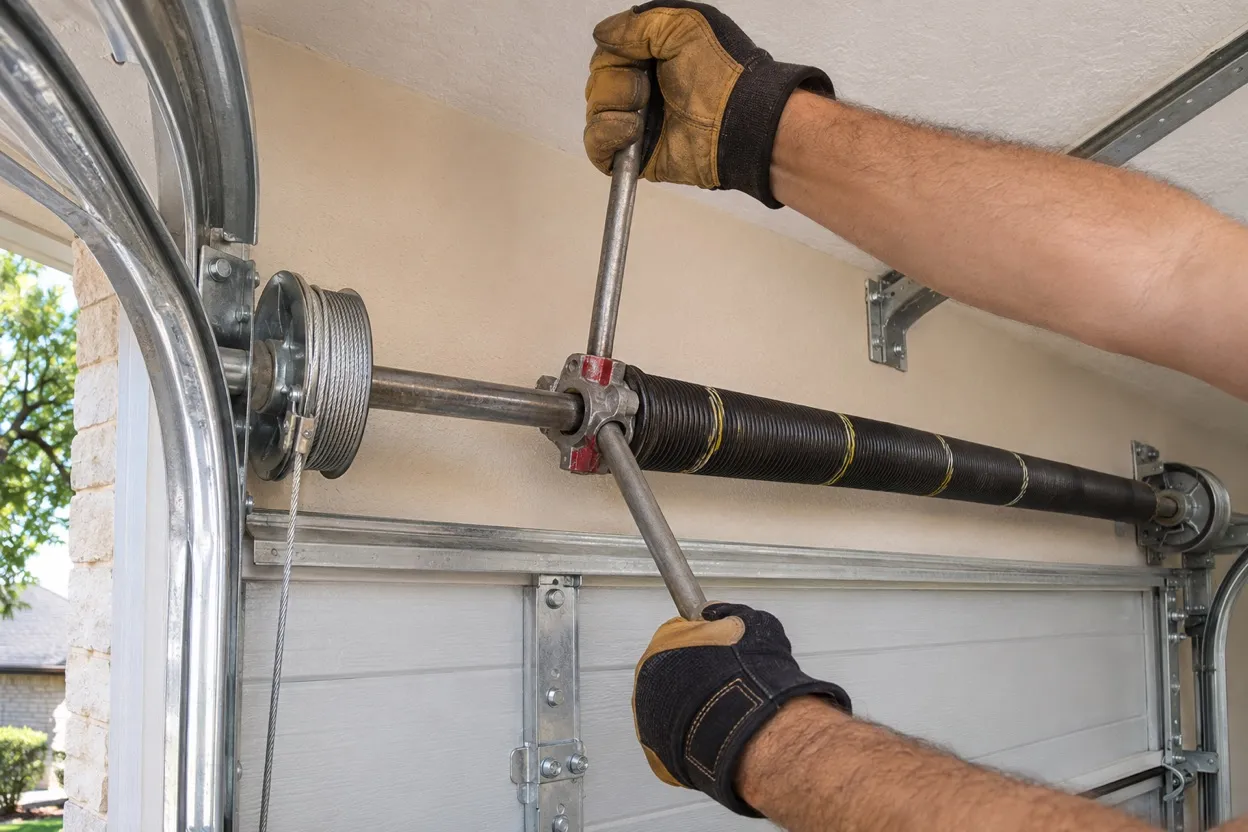
The lift cables are set in the same step. Once the springs are wound, we check the balance, which is a test we come back to below.
We reuse an opener that is sound and works with the new door, and we tell you if it is not worth keeping. A new door often means different weight and a different top section, so the opener is checked, not assumed. After the door is up, the opener’s travel limits and force are reset for the new door.
DASMA’s technical data sheet for sectional doors includes a check that any operator reinforcement is securely attached to the door. So the door side of the opener matters as much as the motor. If the opener is replaced, a chain drive starts at $449 installed and a belt drive at $599 installed. Our opener installation page covers what that visit includes.
Thinking about Wi-Fi control? Our smart openers page covers what works with what, and the post on smart garage door openers: hub or new helps you decide between adding a hub and buying a new opener. That decision is easier to make once the new door is in and the old opener is tested against it.
Before we leave, we test three things: that the door balances, that the opener reverses on contact, and that the photo eyes stop the door. Each is a test you can repeat. DASMA and the federal rule give the numbers we check against, and we show you each test so you know what a passing door does.
First, balance. DASMA’s check starts with the door fully closed. Only then is the manual release pulled to disconnect the door from the opener, and the door is moved by hand. DASMA says a balanced door should stay partially open about 3 to 4 feet above the floor. If you repeat this test, start it the same way, with the door fully closed. If the door will not hold there, the springs need attention, and that is ours to fix.
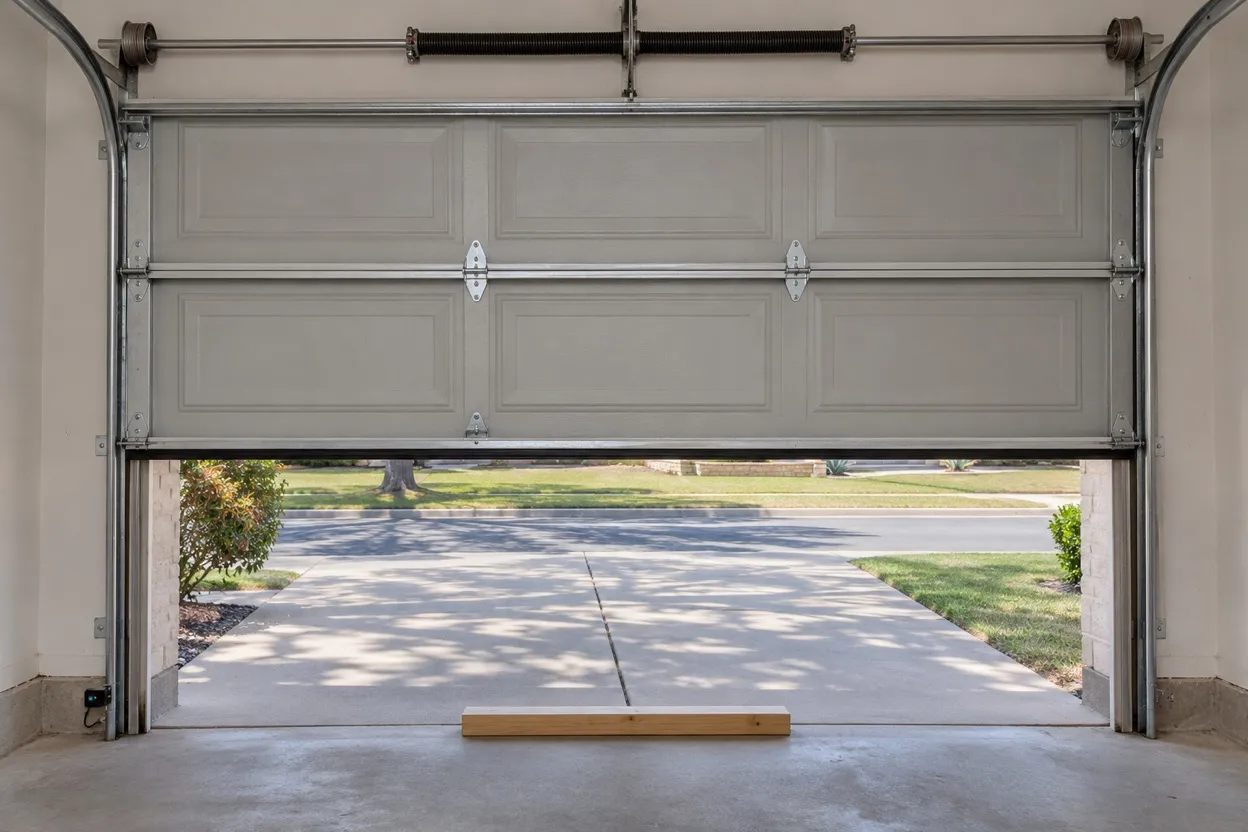
Second, reversal. We lay a 2x4 flat on the floor and close the door onto it. The door should stop on contact and reverse. The federal rule text requires the opener to start reversing within 2 seconds of contact.
One note on the numbers. The 1 1/2 inch figure is the wording from the label that comes with an opener and the homeowner test. The lab test in the rule uses a 1 inch object. Third, the photo eyes. DASMA’s opener safety and maintenance guide says to block the eye with an object and try to close the door. The door should not close unless the wall button is held.
We do not quote a fixed number of hours before we have seen the opening, and we will not make one up. What we can say is what moves the time. A single door is different from a double. Track or framing repairs add work. Low headroom hardware and a new opener each add steps.
Clopay says a DIY garage door install typically takes 8 to 10 hours. That is for a homeowner with a helper, not for a crew with the right tools, so do not read it as a figure for our visit. Any number is a guess until we have seen your opening. When we schedule, we give you a time window for your door.
Plan to park elsewhere for the visit, and expect the garage to be open for part of the day. If you have a car that must leave early, tell us when you book, so the crew can plan the order. We will not promise same-day installation, since a door that has to be ordered cannot be installed before it arrives.
A new door installed starts at the prices below, and the exact price is in writing before we order anything. The starting figure is for a basic steel door of that size. Windows, wood, composite, custom colors and extra hardware cost more. The written quote is what you compare, not the starting price.
| Door | Starts at |
|---|---|
| Single, basic steel | $899 |
| Single, insulated | $1,249 |
| Double, basic steel | $1,599 |
| Double, insulated | $1,899 |
What should the quote list? The door model, the insulation, the windows, the track and hardware, the springs, any opener work, and what happens to the old door. If something is not on the quote, ask. Current coupons and their terms are on the prices page, and we do not repeat them here.
On insulation, one point is worth knowing. DASMA’s technical data sheet 163 says the tested whole-door number is the U-factor, and that R-value is calculated for one section. The two are not comparable. So when a brochure shows an R-value, ask for the whole-door U-factor too.
Is only one section damaged? Then compare panel replacement, which starts at $349, before you decide on a full door. Our new garage doors page has the rest of the buying decision. Our labor carries a one year warranty, and parts carry the manufacturer warranty. To book a measure visit, call (512) 737-0199.
After the install, the most useful habit is a monthly reversal test. The label that comes with an opener says to test it monthly, and that the door must reverse on contact with a 1 1/2 inch object or a 2x4 laid flat. It takes a minute, and it tells you whether the safety system still works.
The monthly check
If anything fails, stop using the opener and call us. Once a year, a tune-up checks balance, hardware and the safety system, and it starts at $120. We install doors across the area, including Austin, Round Rock and Cedar Park. Questions before you decide? Call (512) 737-0199, open daily 7am to 8pm.
We measure first, order the door, and set a time window once it is in hand. On the day, the spring tension is released before the old door comes off, the tracks go in level, the springs are matched to the new door, and the opener is tested last. The price is in writing before we order.
Get your HOA approval in writing, clear the garage and the driveway, and be there at the start and the end. Leave the springs, cables and bottom brackets to us. Run the board test once a month after that.
AK
Starting prices, installed. Your exact price is in writing before any work starts.
There is no fixed figure we can honestly give before we see the opening. It depends on whether the door is single or double, whether the track or framing needs repair, and whether the opener changes. When we schedule, we give you a time window for your door. A door that has to be ordered cannot go in until it arrives.
In the City of Austin, replacing or installing an overhead garage door on a one- or two-family home is on the city's list of work exempt from a building permit, though a permit may still be needed if the property is in a floodplain. Other cities may differ, so confirm with yours. HOA approval is a separate step.
Usually the tracks, hardware and springs come with the new door, because a new door has a different weight and configuration. We reuse an opener that is sound and works with the new door. Anything we reuse has to be sound and suited to the door, and the written quote says what stays and what goes.
A single basic steel door starts at $899 installed, a single insulated door at $1,249, a double basic door at $1,599 and a double insulated door at $1,899. Windows, wood and custom colors cost more. You get the exact price in writing before we order anything.
Plan to be there at the start, so we can confirm the door and the order with you, and again at the end for the walk-through and the tests. Keep cars out of the garage and off the driveway apron, and keep kids and pets away from the opening while the door is apart.
Before you buy a smart hub, look at the learn button on your opener. Here is what works with what, and when a new smart opener is the better buy.
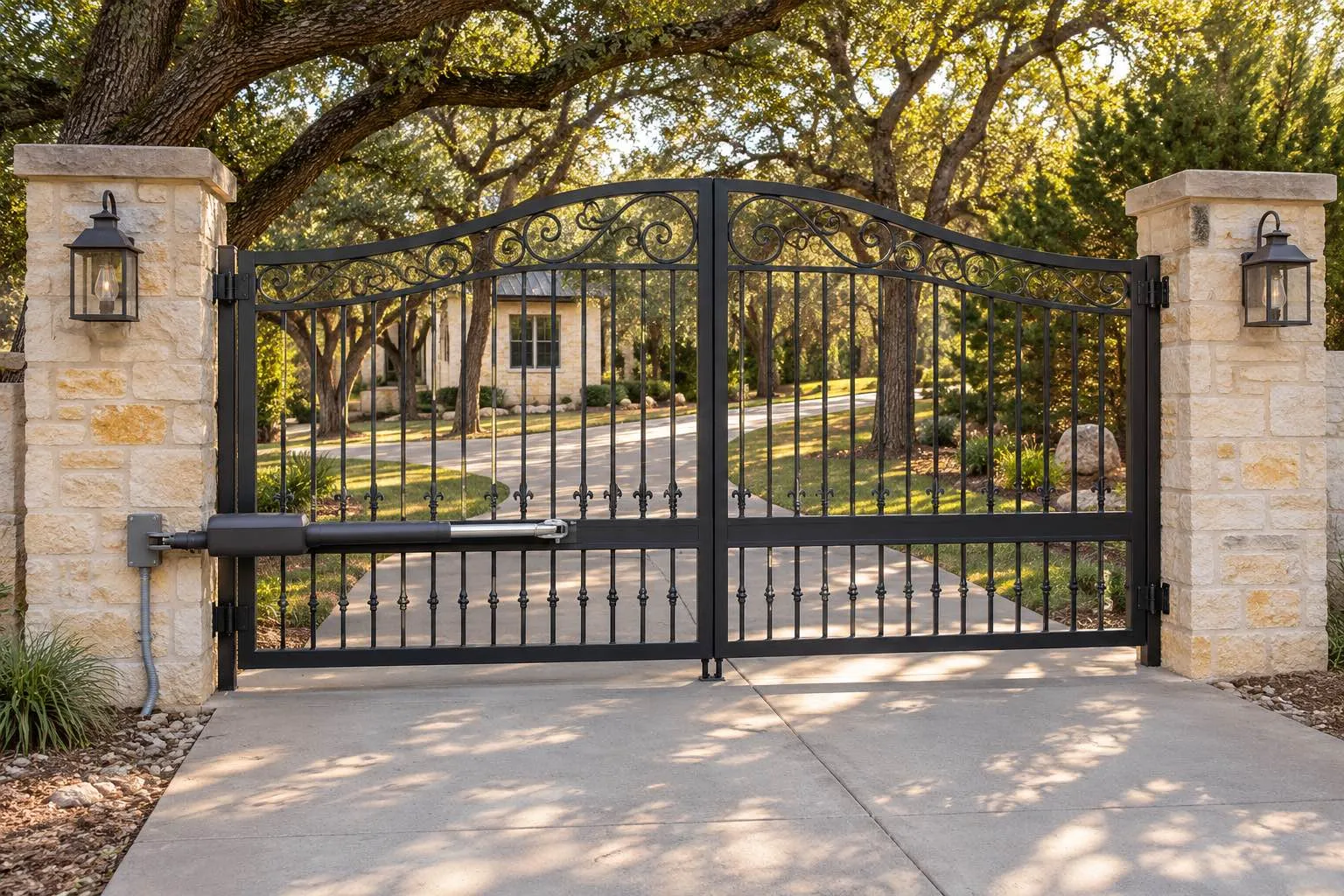
A stuck automatic gate usually has a plain cause: a dirty eye, a weak battery, a bound hinge. Here is what we check first and what is safe for you to try.
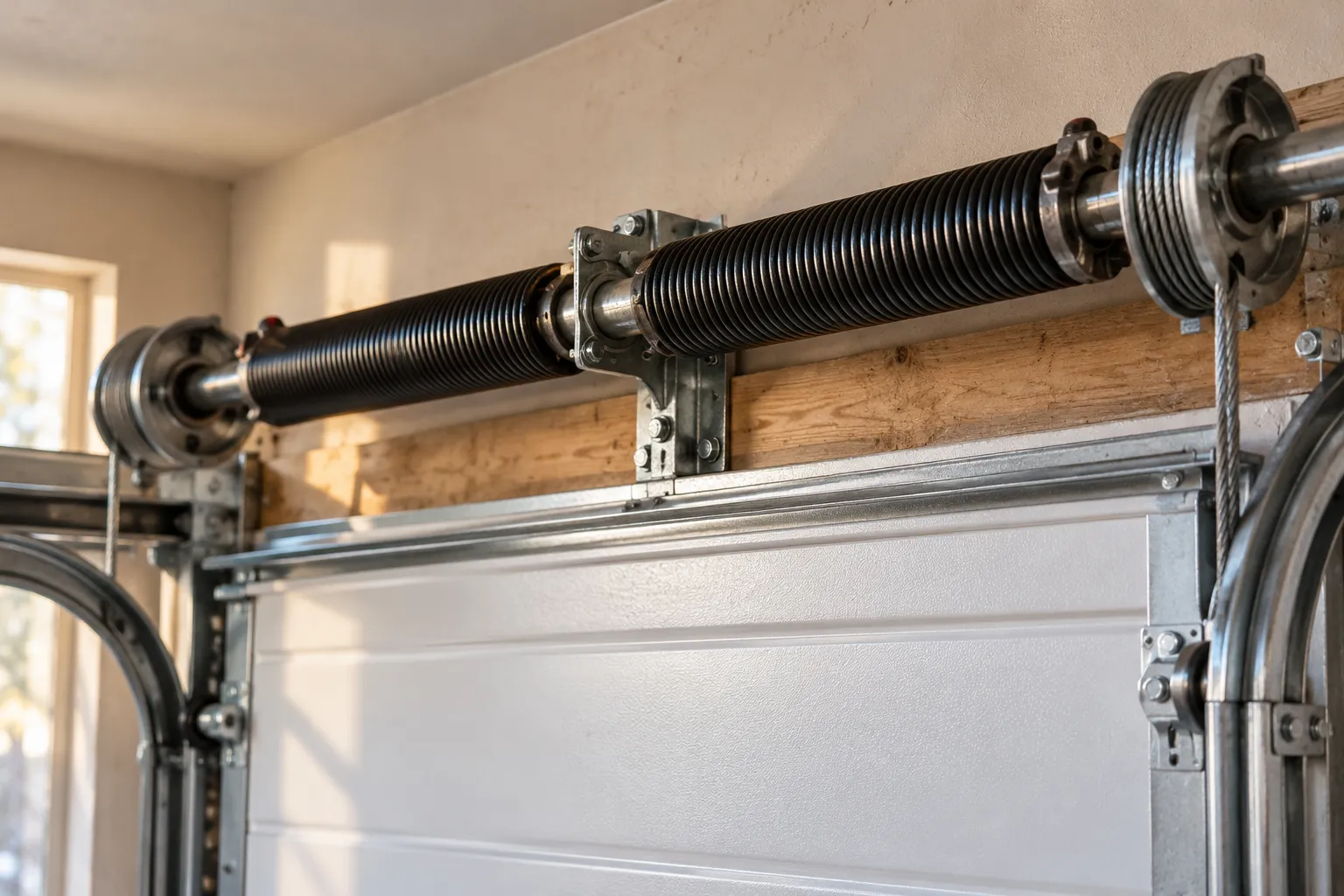
A standard torsion spring is commonly rated for around 10,000 cycles. Here is how to count your own trips, spot a failing spring, and know when to call.
Open daily 7am to 8pm. After-hours emergency line. 304 E Main St #204, Round Rock.