
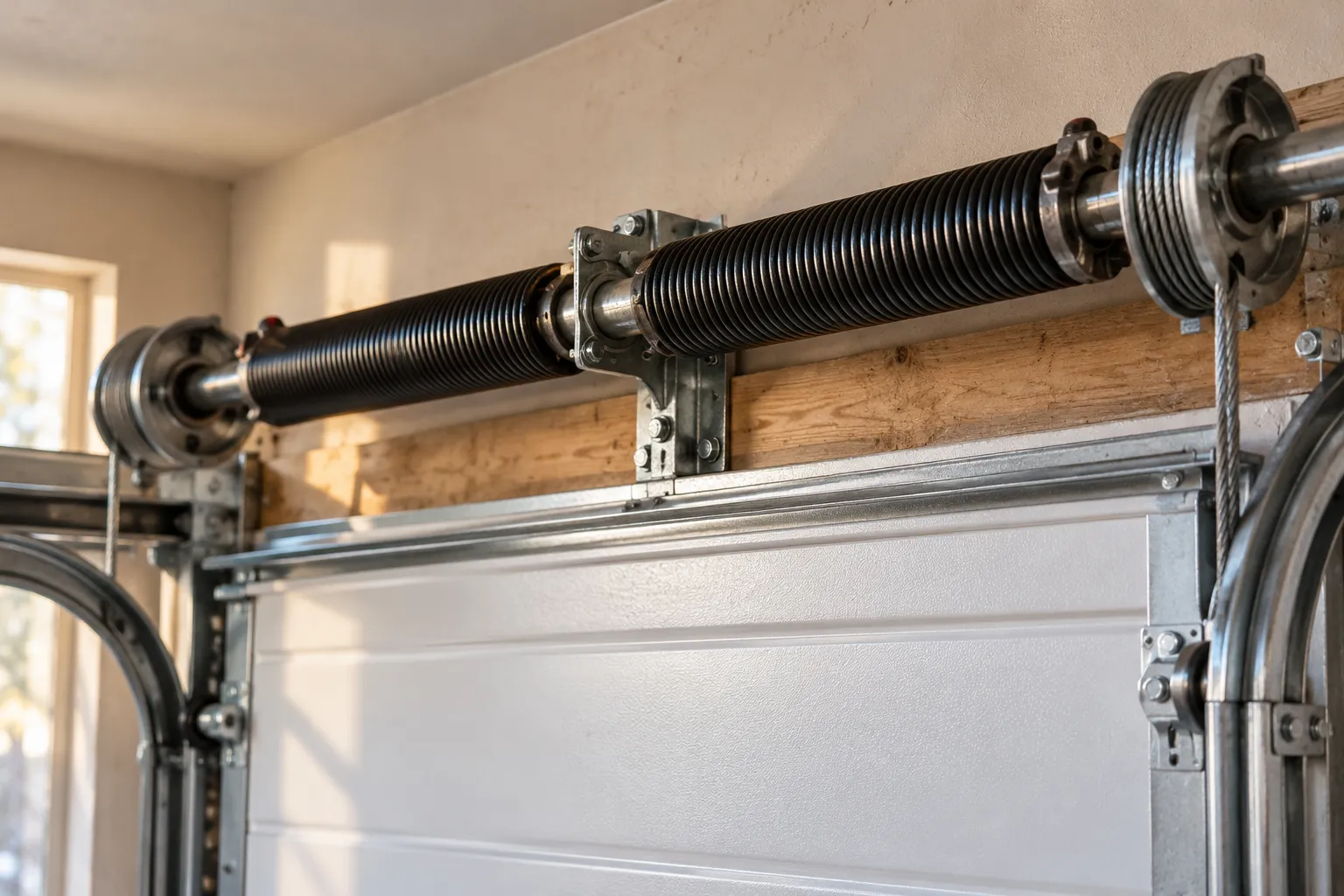
How long do garage door springs last in Central Texas?
A standard torsion spring is commonly rated for around 10,000 cycles. Here is how to count your own trips, spot a failing spring, and know when to call.
A commercial door that will not move has a short list of causes. Here are the safe checks a manager can run, the parts to leave alone, and what to tell us on the phone.
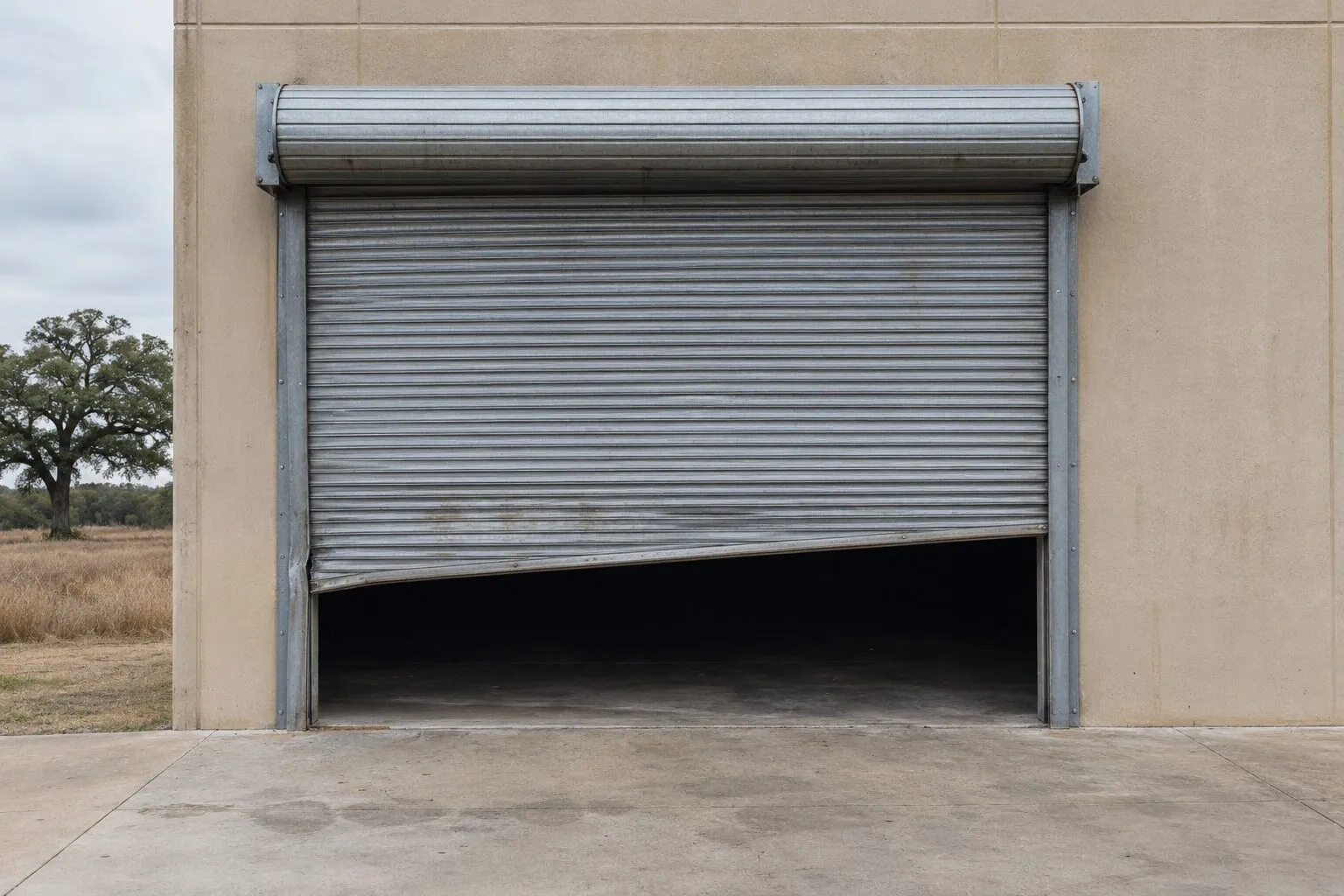
A commercial door that will not move usually comes down to a short list of causes. A few are cheap to rule out: no power, a lock still engaged, a wall station problem, a photo eye blocked or knocked out of line. The rest belong to a trained technician, and the springs top that list. This guide sorts the two, so you know what is safe to check and what to leave alone.
If you manage a store, shop, warehouse or a property with rolling doors, our commercial door and gate service page covers how we work with properties: one contact, itemized estimates, an insurance certificate on request and written findings after every visit. This post is for the moment the door is already down. Most of what follows comes from the industry’s own data sheets, mainly from DASMA, the door trade association, plus the public manuals of one maker, Raynor. We cite Raynor as a source, not as a brand recommendation. Where no source says something, we say so.
Before you check anything, clear the door path. Nobody stands or walks under a door that is stuck, partly open or being tested, and nobody crosses the path of a moving door. Run the door only from a spot where you can see all of it, because DASMA’s maintenance sheet says the door’s operation should be visible from the control. If you cannot see it, do not run it.
Stay out from under the door. A door that stopped partway stopped for a reason you cannot see yet, so treat it as able to move. Keep people, carts and forklifts out of its path until it is checked.
Post a person beside the opening, clear of the door path, or put cones or tape across it, and keep it that way until we have looked. A raised door and a half-lowered door look very different, but neither is a safe place to stand. Raynor, a door and operator maker, puts it in capital letters in its manual: no one should cross the path of a moving door.
At a busy business that line matters. A pallet jack gets pushed through, the door starts down, and the operator is trying to close on something nobody planned for. A clear path, one person at the wall station and a view of the whole door is the setup for everything below.
A rolling steel door is a curtain of slats that winds onto a barrel above the opening. A sectional door is a stack of hinged panels that rides up on tracks. Which one you have changes the parts we talk about, but the safe checks for power, locks and photo eyes apply to both. Rolling fire doors are a separate category with their own tests, and this guide is not about them.
How do you tell which you have? A rolling door looks like a corrugated or slatted sheet with a metal hood or a round barrel over the opening, and it rolls up out of sight. A sectional door shows horizontal panel lines and lifts overhead on tracks, with springs on a bar above the opening. If you are unsure, send us a photo of the whole door and we will tell you.
On fire doors, DASMA’s technical sheet on rolling steel fire doors says the door must be inspected and tested not less than annually as required by NFPA 80. Is yours a driveway or community gate instead of a building door? Read what to check when a gate will not open or close instead.
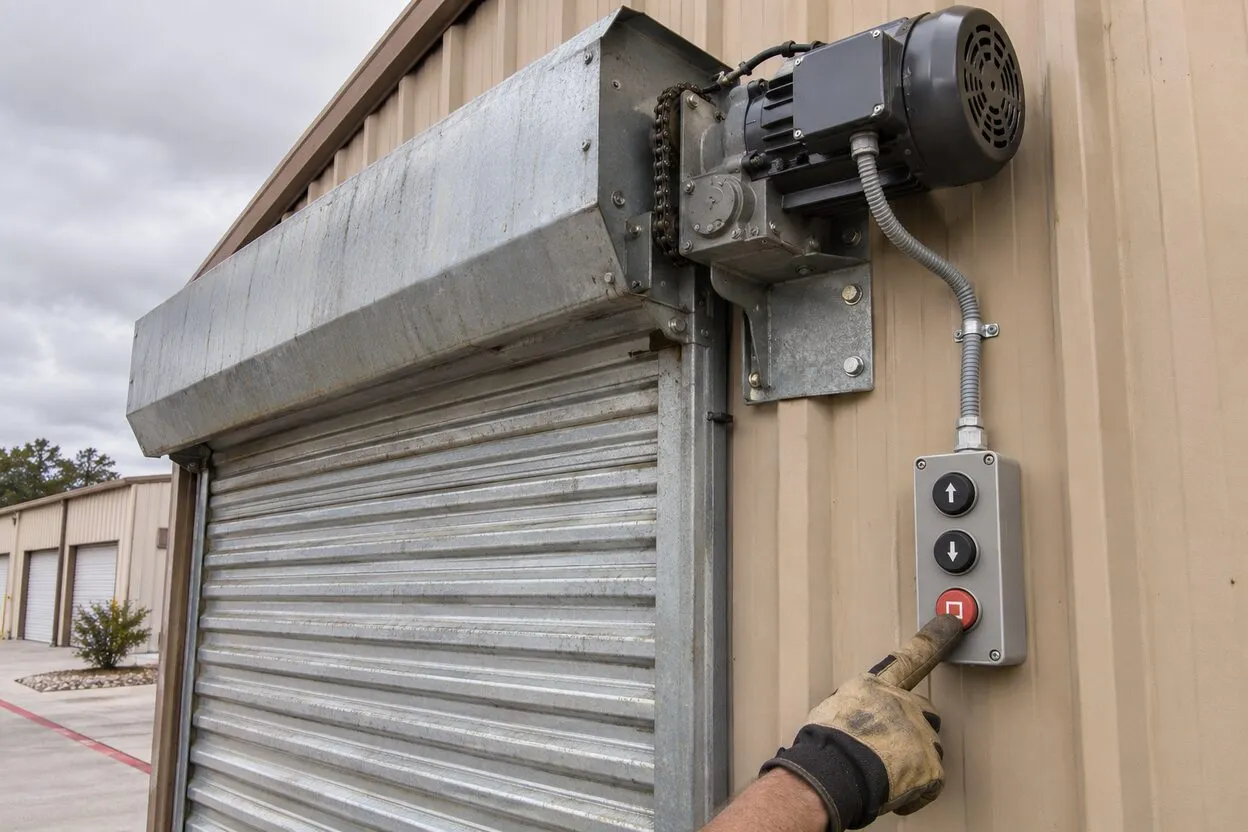
Start with what costs nothing to rule out: power to the operator, the wall station, and a lock or slide bar left engaged. DASMA’s installer sheet on commercial doors lists “a door lock that may not have been released” among the reasons a powered door will not move. Do these checks in order, and stop the moment anything looks bent or sounds wrong.
The data sheets do not list power or the stop button. Those two are on the list because they are the cheapest things to rule out. One try is a test. Ten tries is a good way to turn a small problem into a bigger one.
Many commercial doors use monitored safety devices, photo eyes beside the opening and a sensing edge on the bottom bar. A monitored operator checks that the device is present and working. DASMA’s sensing edge sheet says a non-monitored system will not detect a fault in the circuit. When a monitored device is blocked, out of line or damaged, the door can refuse to close normally.
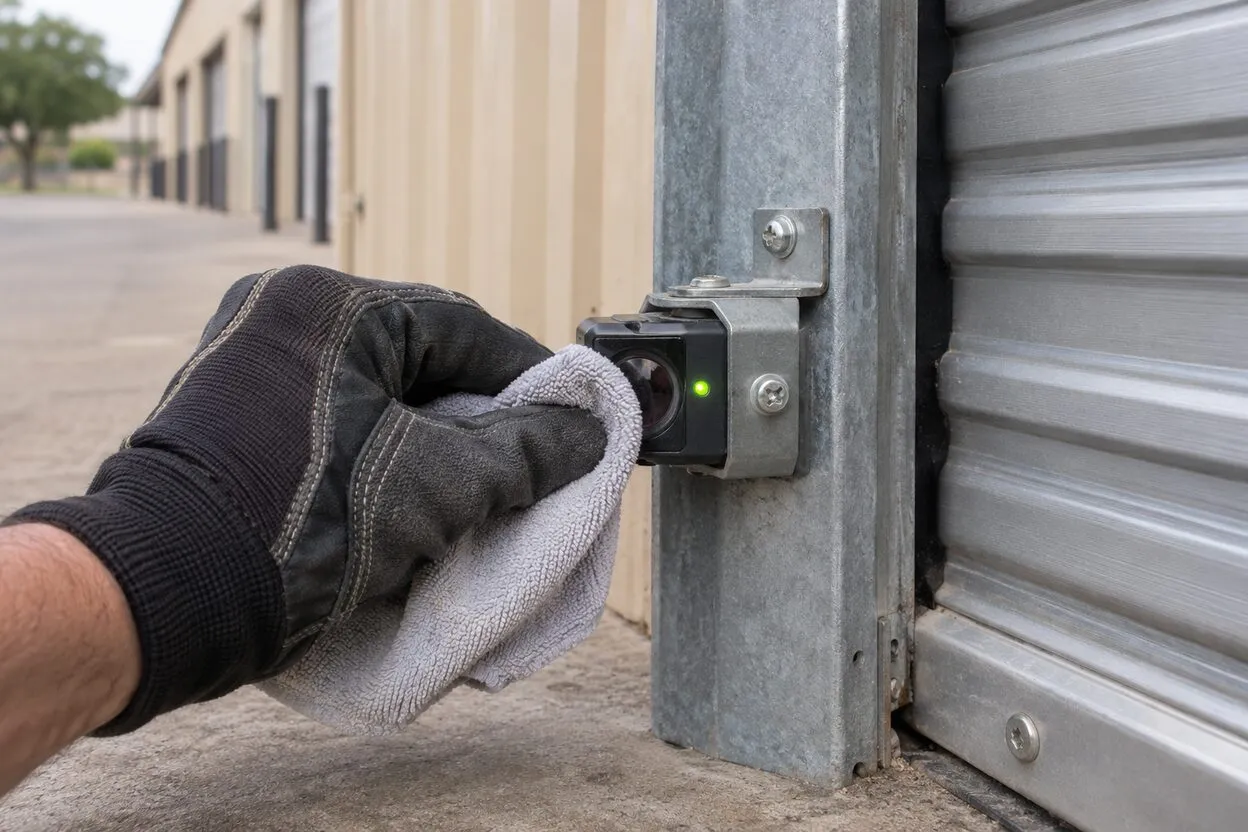
Look at the photo eyes first. They sit low on each side of the opening, and Raynor’s manual says to install them no higher than 6 inches above the floor. Is a pallet, a box or a cart wheel in the beam? Is either eye knocked crooked? DASMA’s installer sheet says to verify a photo eye is aligned correctly. Many operators also have an indicator light, and Raynor’s manuals use a lit LED to flag a photo cell problem, but what a light means is model specific. Check your manual, and look only at lights you can see with every cover closed. Do not open the operator or its control box.
A dusty or smeared lens is worth a wipe with a soft dry cloth. Reach it from beside the opening, never from under the door, and only while nobody is at the controls. That one is our own tip: the sheets we read do not list dirt as a cause. Do not bend, re-aim or take the eye apart. That is a service call.
Now the bottom bar. DASMA’s sheet on sensing edges says to check the edge, and the wiring between the edge and the operator, for damage regularly. It adds that a pneumatic edge with a punctured or cut air chamber may not work properly. A torn edge, a loose edge or a cut wire is something you can see from the floor. Fixing it is a technician’s job. DASMA’s installer sheet names incorrect wiring as the likely cause when an edge does not work at all, and edge wiring is not something to open up yourself.
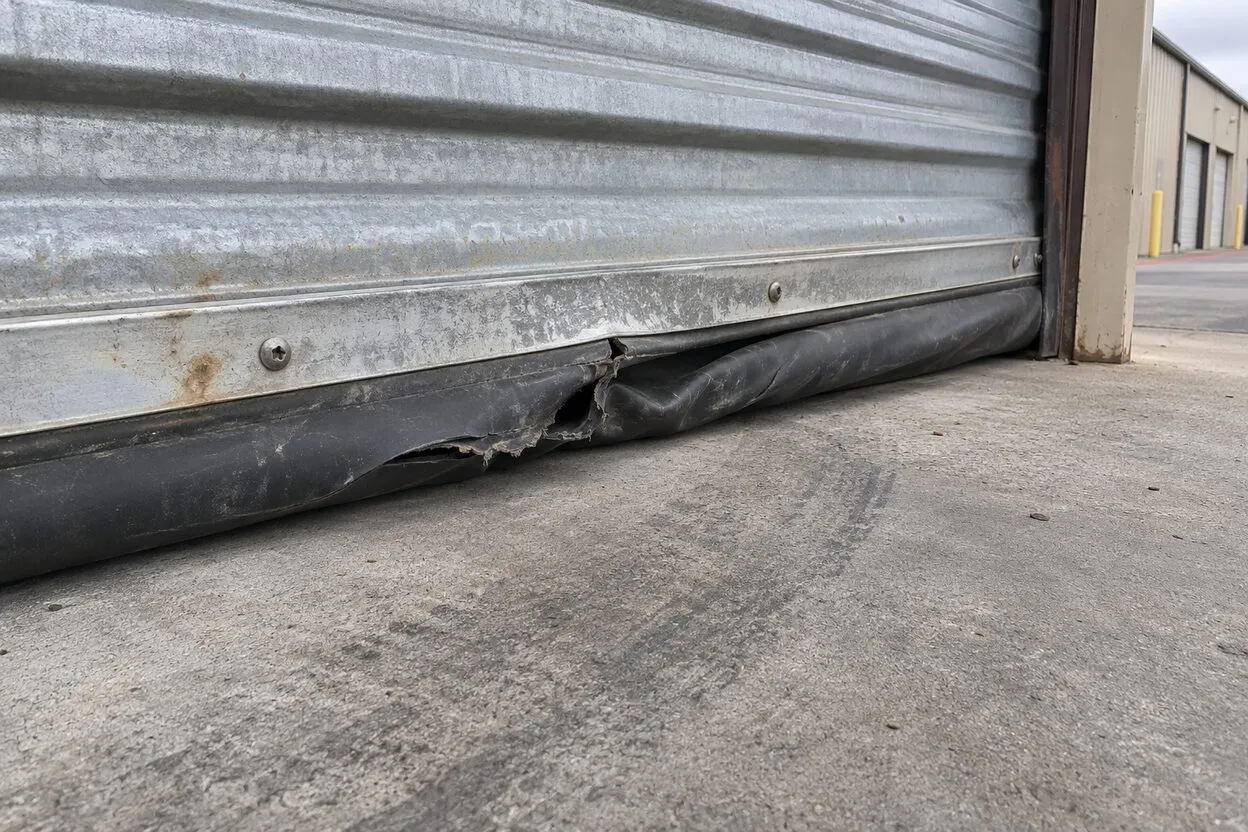
A door that closes only while you hold the close button is in constant-pressure mode. That is the designed behavior when a safety device is missing or not working properly, so the operator will not close the door on its own. DASMA’s sheet for building maintenance supervisors says constant pressure on the close button is required when the sensing devices are not functioning properly.
What does that look like at your door? Hold the button and the door comes down. Let go and it stops. The remote will not close the door, and any automatic close does not run. Raynor’s manual says the radio or open and close controls will only open the door in that mode. If your door behaves this way, a photo eye, a sensing edge or the wiring to one of them is the likely cause. Tell us that on the phone, because it narrows the search before we arrive.
Can you still lock up? Sometimes. If you have to secure the building, close the door only from the wall station, with the whole door in view, the path clear and nothing bent. Release the button and the door stops.
Do not count on the door to stop for anything in its way while you hold the button. If anything looks crooked, scrapes or sounds wrong, let go and leave it. That is a stopgap to lock up, not a repair, and the fault is still there in the morning.
For the technical background, one manufacturer’s manual, Raynor’s jackshaft operator instructions, describes this constant-pressure mode and the monthly safety test. Operator and wiring faults are covered on our opener repair page.
Springs and counterbalance parts are never a manager’s job. DASMA says the counterbalance assembly and its related parts are under extreme spring tension at all times, and tells maintenance staff not to adjust the tension wheel. If the operator strains, the door drifts or the door will not stay up, treat that as a possible spring problem and call us.
Never touch the springs or the tension wheel. “Call for service if spring needs adjusting,” says DASMA. Raynor adds that weak or broken springs may cause a door to fall rapidly. Do not stand under a door you suspect has a spring problem.
The data sheets name specific signs. DASMA’s maintenance sheet says that if an electric operator sounds like it is laboring to open the door, a spring counterbalance evaluation should be considered. Its installer sheet lists a broken spring, a lock that was not released and a clutch out of adjustment as things to check when the door and operator have power and the door does not move. It also says to check balance on a door that drifts after the operator stops. DASMA’s TDS 286 says to call for service if a door must be propped open.
For a sectional door the same rule holds. DASMA’s inspection sheet for sectional doors tells people not to touch the spring components because they are under extreme tension. We wrote about residential spring life in how long garage door springs last. We have no commercial cycle number to give you, and we will not make one up. Our spring replacement page covers the repair itself.
| What you see | Likely cause | What to do |
|---|---|---|
| Operator has power, door does not move | Broken spring, a lock still engaged, or a clutch out of adjustment | Check for a lock yourself, then call |
| Operator strains or labors | Counterbalance may need evaluation | Stop and call |
| Door drifts after the operator stops | Balance problem | Stop and call |
| Door will not stay open | Possible counterbalance problem | Call. Do not prop it open, and keep everyone out from under it |
| Closes only while you hold the button | Sensing device or its wiring | Close it only with the whole door in view, the path clear and nothing bent. Let go to stop it. Then call |
| Curtain or bottom bar rubs or hangs crooked | Bent guide or bent bar | Stop and call |
If a guide is bent, the bottom bar is bent or binding, the curtain rubs the wall or hangs crooked, or a cable is frayed, stop running the door. DASMA says bent guide angles must not bind the curtain and bottom bar, and that the bottom bar and curtain should not be bent, damaged or rub the wall above the opening. Leave the door where it is.
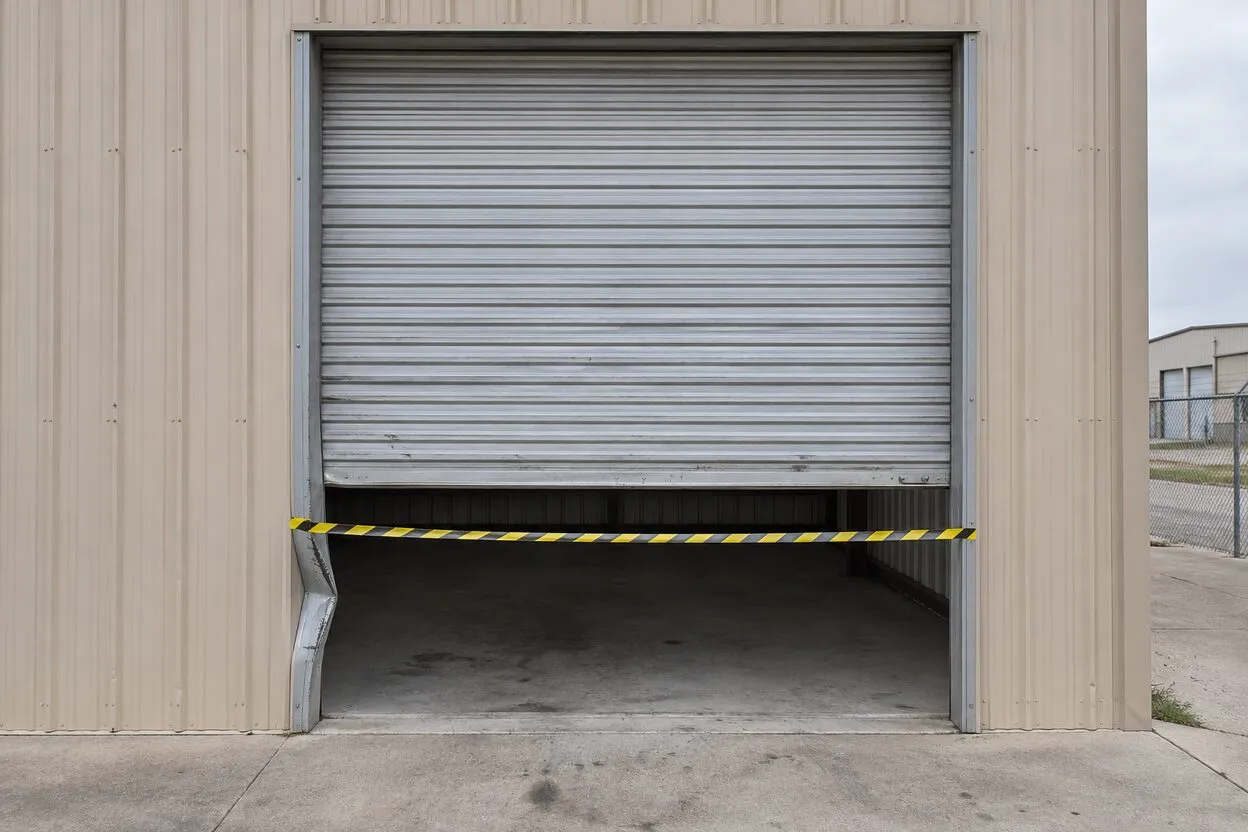
What about a door a truck or forklift has hit? No data sheet we found states a rule for impact damage, so we will not pretend there is one. Our rule is plain: a door that binds, rubs or hangs crooked after a hit is a service call. The same goes after a wind storm. DASMA’s sheets say an event such as high wind, seismic or flooding should lead to an immediate evaluation of all door systems.
Our rule covers the fix too. Do not try to straighten a guide, pry the bottom bar free or reach into the hood or barrel. That work waits for us.
On a sectional door, look at the lift cables beside the tracks. DASMA’s consumer safety page says frayed or worn cables are in danger of breaking, which can cause injury. Do not pull on them. Our off-track repair page and our cable and roller repair page cover what we do once we are there.
Leave the chain hoist and the manual release alone unless the operator manual on site shows the steps, the door is closed and nothing looks bent. Every source we read adds safety conditions a manager cannot judge from the floor, such as a weak spring, a door that will not hold its position, or someone standing under it. Some commercial operators have no manual release at all.
Here is what the manufacturers say. Raynor’s trolley operator manual says not to attempt to manually force open or close a malfunctioning door. Its guides say to use the release only with the door closed where possible, and warn that weak or broken springs can drop a door quickly. DASMA’s sheet on sectional door inspection notes that a commercial operator may have no manual release, so you cannot assume yours has one.
Leave the release and the chain alone. We are not going to describe the steps here. The release is brand and model specific, and a wrong move on a door with a spring problem is how people get hurt.
One more number is worth knowing. DASMA says the force to open a rolling door should not exceed 35 pounds on a hand chain or 25 pounds on a crank. If the chain takes far more than that, the sheets say a significant departure from the limits may point to a counterbalance problem that needs a trained technician. That is a reason to stop pulling and call, not a reason to pull harder.
Give us the address and an access contact who can meet us, the door type and size if you know them, and what the door did right before it stopped. Add any indicator light, whether it is stuck open or shut, any visible damage, and photos you can send. That gives us a clear picture of the problem before we drive out.
Have this ready when you call
If you can send a photo of the whole door, the bottom bar and each side guide, send them. Photos of a bent guide or a torn edge answer questions faster than a description does. Call us at (512) 737-0199.
The commercial service call is $95, and you get the price in writing before any work starts. For a larger repair we write an itemized estimate a board or owner can approve. We are open daily 7am to 8pm, with an after-hours emergency line and an after-hours trip fee we tell you on the phone before we drive out.
Here is the order of a commercial call, as described on our commercial page:
You get one contact for the property, and an insurance certificate on request before work begins. The current figures are on our prices page. We work with businesses and property managers across the area, including Round Rock, Pflugerville and Georgetown. We do not promise an arrival time here, because it depends on the day. The office gives you an arrival window when you call.
DASMA’s rolling door sheets set a routine. Test the sensing devices at least weekly, by the method in your operator manual, evaluate how an electric door performs quarterly, and have a trained door systems technician inspect it at least annually or as the door maker recommends. DASMA adds that its sheets do not replace the maker’s own maintenance schedule, so the manual on site comes first.
The weekly test comes from DASMA’s rolling sheet door maintenance sheet, which says to test the door’s sensing devices at least weekly, including both ends of a sensing edge. The annual inspection by a trained technician comes from DASMA’s maintenance sheet for building maintenance supervisors and its companion for facility managers, TDS 269. Raynor’s manual adds a monthly safety test and a three month lubrication and mechanical check, but that schedule is for Raynor operators.
A walk-around between visits
None of that touches a spring. If a check turns up something wrong, call us. A scheduled visit is the same idea. Our tune-up page shows the residential version, and for a commercial door you can ask about one when you call.
If the safe checks do not bring the door back, or you see a spring sign or a bent part, it is time to call. Clear the path, check power, the wall station and any engaged lock, then look at the photo eyes and the bottom edge. A door that closes only while you hold the button has a safety device problem.
Leave the springs, the tension wheel, the cables and the manual release alone. A door that binds, rubs or hangs crooked stays where it is until we look. If a sectional door turns out to be past repair, our installation day guide shows what replacement involves. When you are ready, call (512) 737-0199, and tell us what the door did before it stopped.
Sunny
Starting prices, installed. Your exact price is in writing before any work starts.
Only if the door will close safely. If it closes while you hold the wall station button, you can use that to secure the building, as long as you can see the whole door, the path is clear and nothing is bent. Let go of the button and the door stops, so let go the moment anything scrapes, binds or looks crooked. If it will not close, keep the opening blocked off or watched from clear of the door path, and tell us on the phone. Do not force it.
That is constant-pressure mode, and it is the designed behavior when a safety device such as a photo eye or sensing edge is missing or not working properly. The operator will not close the door on its own until the device is fixed. In that mode a remote usually will not close the door, though it may still open it, and automatic close does not run. Tell us it behaves this way when you call.
Usually leave it. Manufacturers add conditions a manager cannot judge from the floor: a weak or broken spring, a door that will not hold its position, or a person under the door. Some commercial operators have no manual release at all. If the operator manual on site shows the release and the door is closed and undamaged, that is the maker's route. Otherwise call.
DASMA's rolling door sheets say a trained door systems technician should inspect at least annually or as the door maker recommends. They also list a weekly test of the sensing devices and a quarterly check of how an electric door performs. Those sheets are written for rolling doors. For a sectional door, and wherever the maker's schedule differs, the maker's schedule comes first.
No. A rolling steel fire door has its own inspection and drop testing under NFPA 80, and DASMA covers it in a separate sheet. This guide is about regular rolling steel and sectional doors. If you are not sure which kind you have, tell us on the phone.
A standard torsion spring is commonly rated for around 10,000 cycles. Here is how to count your own trips, spot a failing spring, and know when to call.
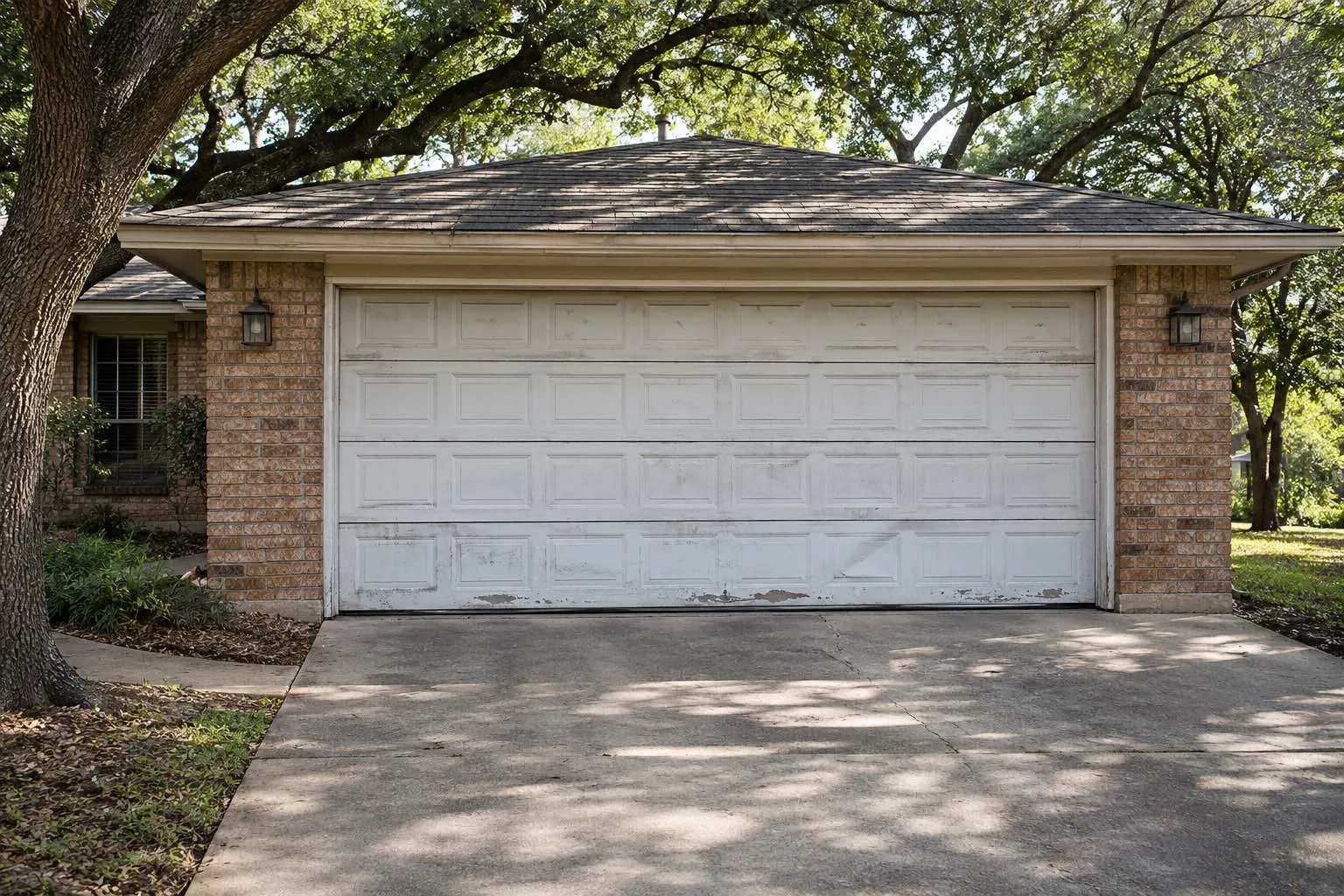
A broken part is a repair far more often than a reason for a new door. Here is how we tell the difference: the signs, the one-section option, hail dents, insulation and starting prices.
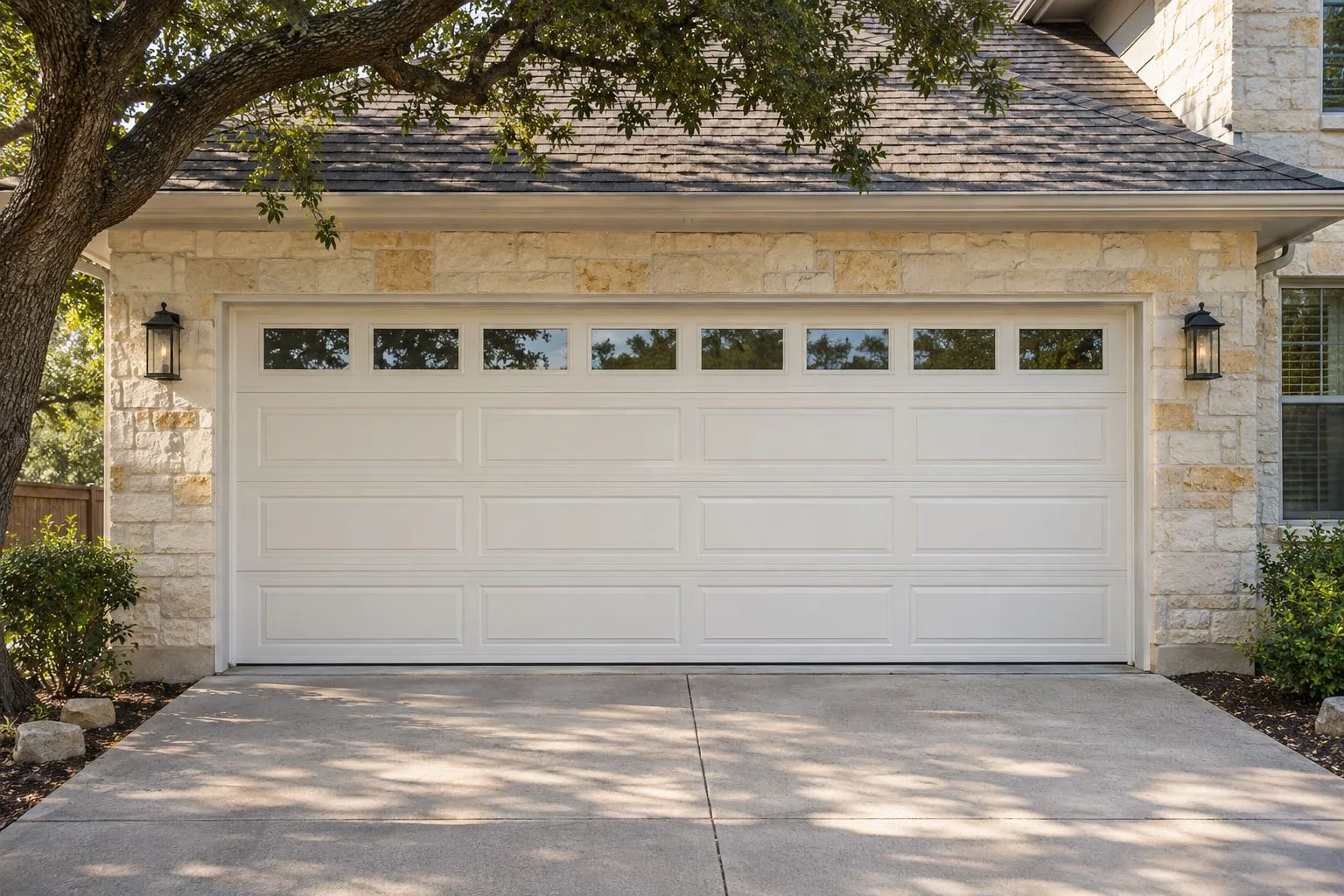
From the measure visit to the final safety test, here is what happens when we install a garage door, what to get ready, and what the price should cover.
Open daily 7am to 8pm. After-hours emergency line. 304 E Main St #204, Round Rock.